Secrets of the Moon’s Permanent Shadows Are Coming to Light
“This is not the Apollo program; we’re planning to stay there for a whole month,” said Jim Green, NASA’s former chief scientist. He added, “The concept of acquiring materials and having habitats on the moon is viable.”
2025 is the year of the first Artemis launch and I can’t wait.
Also, if this week has already burned you out, Quanta Magazine is an excellent source of optimism.
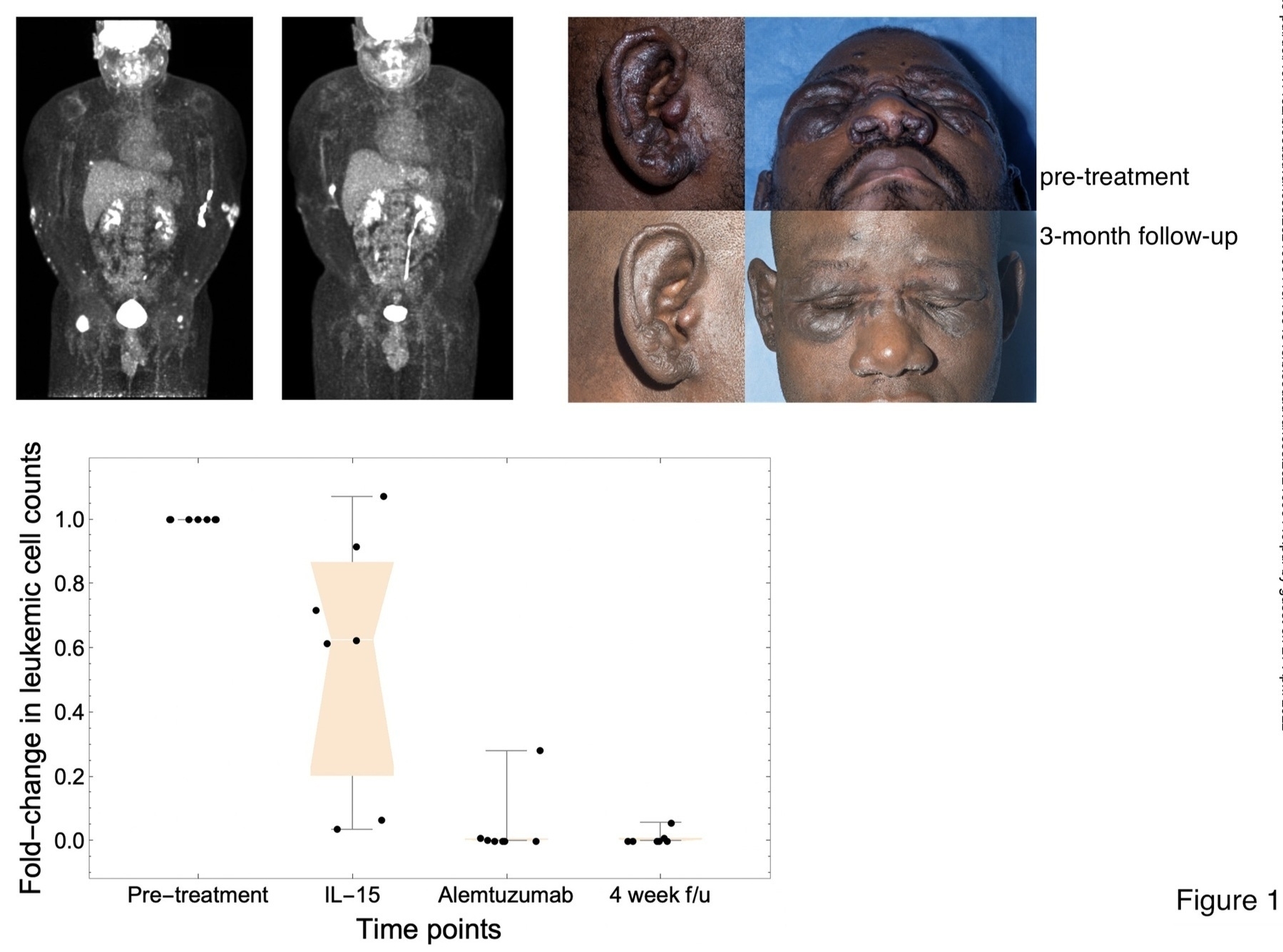
🧪 For the five people out there who are interested in T-cell malignancies, one of the last papers we wrote with Dr. Waldmann is now out as early access at Blood Advances. It is a modest phase 1 trial of IL-15 and Campath with interesting results.
Alan Jacobs on science and politics
“Science gets entangled with politics; it always has and it always will. And every time it happens the reputation of science get damaged. I am of course not a scientist and cannot speak authoritatively to these matters; but I can at least point to some intellectual problems that need to be addressed.”
Full post here. As a scientist of sorts, I can only nod my head in agreement.
The Good Science Project is underselling how good it is. More like this, please. (signatures below the manifesto are a good — heh — example of quality over quantity)
🧪 Good morning to everyone except to whomever is in charge of the eRA Commons service desk. You’d think that a multi-billion dollar operation like NIH would have a decent answering service, with a call-back option, number in line, etc. ★☆☆☆☆, won’t use again (if only)
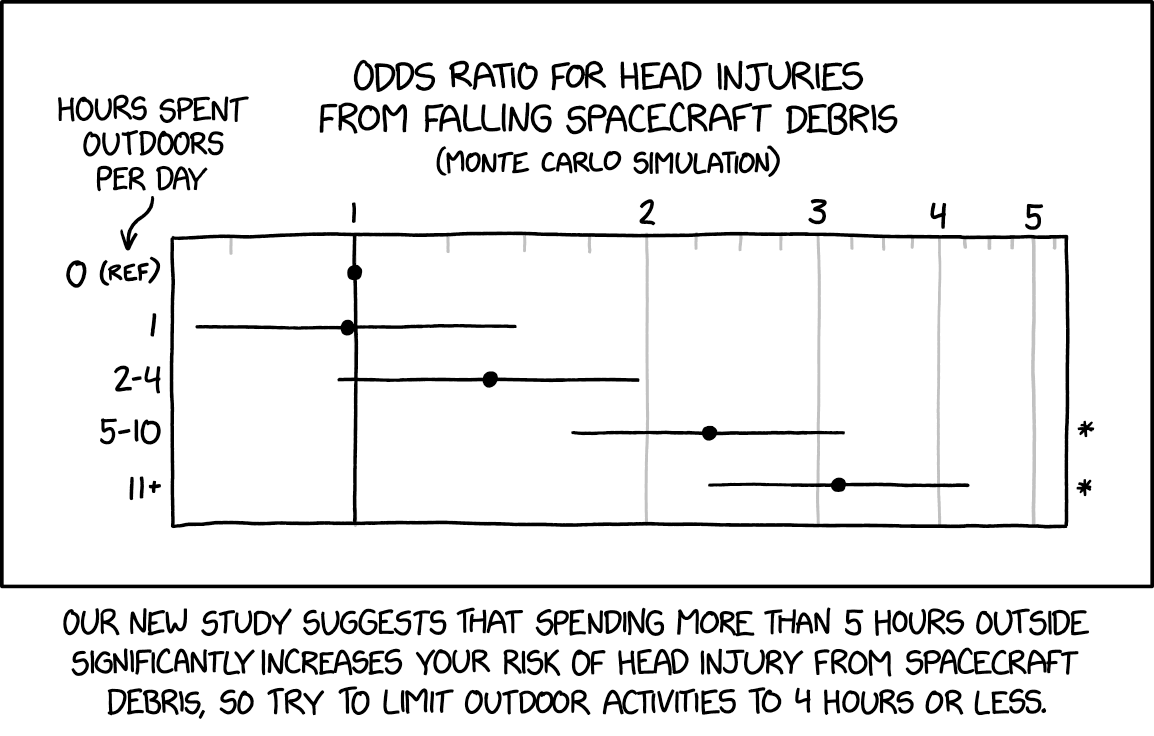
A marvelous xkcd from a few days ago. This one strip explains the trouble with odds ratios better than hours of premed/med stats 🧪
Science and scientism
A big reason Don’t Look Up didn’t sit right with me was its simplistic view of the scientific consensus. “Listen to the goddamn qualified scientists…” bellows Ariana Grande paternalistically.
Meanwhile, qualified scientists from reputable institutions of higher education act as petty and vindictive prima donnas. The linked article is one scientist’s story of having to suffer through years of academic harassment for publishing a paper that rubbed some of her fellow researchers the wrong way. From the abstract:
A naïve researcher published a scientific article in a respectable journal. She thought her article was straightforward and defensible. It used only publicly available data, and her findings were consistent with much of the literature on the topic. Her coauthors included two distinguished statisticians. To her surprise her publication was met with unusual attacks from some unexpected sources within the research community. These attacks were by and large not pursued through normal channels of scientific discussion. Her research became the target of an aggressive campaign that included insults, errors, misinformation, social media posts, behind-the-scenes gossip and maneuvers, and complaints to her employer. The goal appeared to be to undermine and discredit her work.
Goddamn scientists indeed.
Godwin’s Law and the Rise of Hyperbole on MedTwitter
“Today’s Galileos fight over one or two vaccine doses in teenagers, whether the risk of vaccine-induced myocarditis is 1/1000 or 1/10, 000. Nothing encapsulates our pettiness more completely than our probability wars.”
Echoes of Chris Hitchens here.
A brief chronology of my employment
- 1994: Fifth grade; I am charged with editing the school newspaper. There is an Intel 386 PC at home that is about to be upgraded to a 486 and do something more than run Lands of Lore.
- 1996: Seventh grade; I typeset a book of poems1. The school newspaper becomes the school magazine — in layout only; the publishing schedule remains haphazard — as I upgrade from Word 6.0 to QuarkXPress
- 2000: High school starts again after a freshman year interrupted by NATO bombing. I make the town library’s official website. It is a php hack job laid out in tables instead of the newfangled and to me unknown CSS; it still wins an award.
- 2002-2008: Med school; I typeset a book here and there and occasionally help out with the library website.
- 2009: Teaching assistant, Institute for histology and embryology, Belgrade School of Medicine.
- 2010: Resident, Internal medicine, JHU/Sinai, Baltimore MD.
- 2013: Chief resident, Internal medicine, as above; I understand the benefits of not being invited to a meeting.
- 2014: Clinical fellow, hematology/oncology, National Cancer Institute, Bethesda MD.
- 2016: As above, but also Chief fellow ex tempore for the joint NCI/NHLBI fellowship; my hatred of poorly-run meetings intensifies.
- 2017: Staff clinician, later to be renamed Assistant research physician, Clinical Trials Team, Lymphoid Malignancies Branch, Center for Cancer Research, National Cancer Institute, National Institutes of Health, Bethesda MD; the 1994 me marvels at the word salad trailing the title.
- 2021: Chief Medical Officer, Cartesian Therapeutics.
-
Someone else’s, to be clear. ↩︎
Blogroll
I, for one, am glad that blogs are making a comeback. Here are a few I’ve been reading for at least a few months, many of them for years, some for decades.
Applied philosophers
The only true philosophers of our time.
- Mathflaneur (by Nassim Taleb)
- Ribbonfarm (by Venkatesh Rao, who also has a newsletter of half-baked ideas he calls Ribbonfarm Studio)
The new scientists
People without major academic credentials who have interesting ideas about science.
- Alexey Guzey (also see Guzey’s Best of Twitter, and also see New Science)
- Applied Divinity Studies
- Astral Codex Ten (former Slate Star Codex)
- Fantastic Anachronism
- Gwern
- Nintil
The old scientists
People with major academic credentials and interesting ideas, something to teach, or both.
- I am Intramural (from the NIH Intramural Research Program)
- Statistical Modeling, Causal Inference, and Social Science by Andew Gelman
- Statistical Thinking by Frank Harrell
- Stephen Wolfram Writings
- The Mathematical Oncology Blog (see also This week in Mathematical Oncology)
The ludites
People against modernity of one sort or another.
- Axiom of Chance (Simon DeDeo, who does not seem to have a Twitter account)
- Patrick Rhone (who does have a Twitter account)
- Study Hacks (by Cal Newport, whose Twitter account, if real, has been abandoned years ago)
- Wrath of Gnon (who is in fact — and sadly — all Twitter)
People doing their own thing
Unclassifiable but exhilarating.
- Craig Mod (and on Twitter) who walks, makes books, and takes photos.
- Garden of Forking Paths (by Abe Callard, who watches movies)
- Rands in Repose (by Michael Lopp, who manages people)
- The Sephist (by Linus, who makes his own software tools)
- Thought Asylum (by Stephen Millard, who makes other people’s software tools more usable)
Apple enthusiasts
Some tips, a few tricks, many opinions.
- And now it’s all this
- Brett Terpstra (if you have a Mac and use it for more than just browsing the internet and answering email — not that there is anything wrong with that — Terpstra’s tools will save you days of work; he could easily have been slotted in the category above, but the Apple tag predates all and he is an Apple lifer)
- Daring Fireball (by John Gruber)
- Hypercritical (a sadly neglected blog by John Siracusa although what you should really check out is the podcast of the same name which has been out of production for years but still fun and relevant)
- Macdrifter
- Marco.org (by Marco Arment)
Finance-adjacent
Economists and investors, for the most part.
- Global Inequality (by Branko Milanović)
- Marginal Revolution (by Tyler Cowen and Alex Tabarrok who also wrote an excellent textbook in economics which I plan on reading some day, likely in retirement)
- Pseudoerasmus (the last post was in 2017 so I’m not holding out any hope, though he is on Twitter)
- The Rational Walk (see also Rational Reflections and the Twitter account)
- 10-K diver (as close to a blog that a Twitter account can get)
Journalist-cum-substackers
Former or current journalists who now earn some or all of their living by writing newsletters via Substack, which is slowly reinventing blogs (in the sense of reinventing the wheel, not actually making them better and in fact in many was making them much worse).
- Everything Studies (by John Nerst)
- Galaxy Brain (by Charlie Warzel)
- Insight (by Zeynep Tufekci, who is hands down the best journalist currently writing)
- Slow Boring (by Matthew Yglesias)
Company blogs
For when I really want to know when the next update is coming.
- Devonian Times, from the makers of my note-collecting tool of choice, DEVONthink
- The Omni Group, makers of OmniFocus (and OmniGraffle, which I don’t use often enough for it to be essential but which is fairly
- Wolfram Blog, from the makers of Mathematica