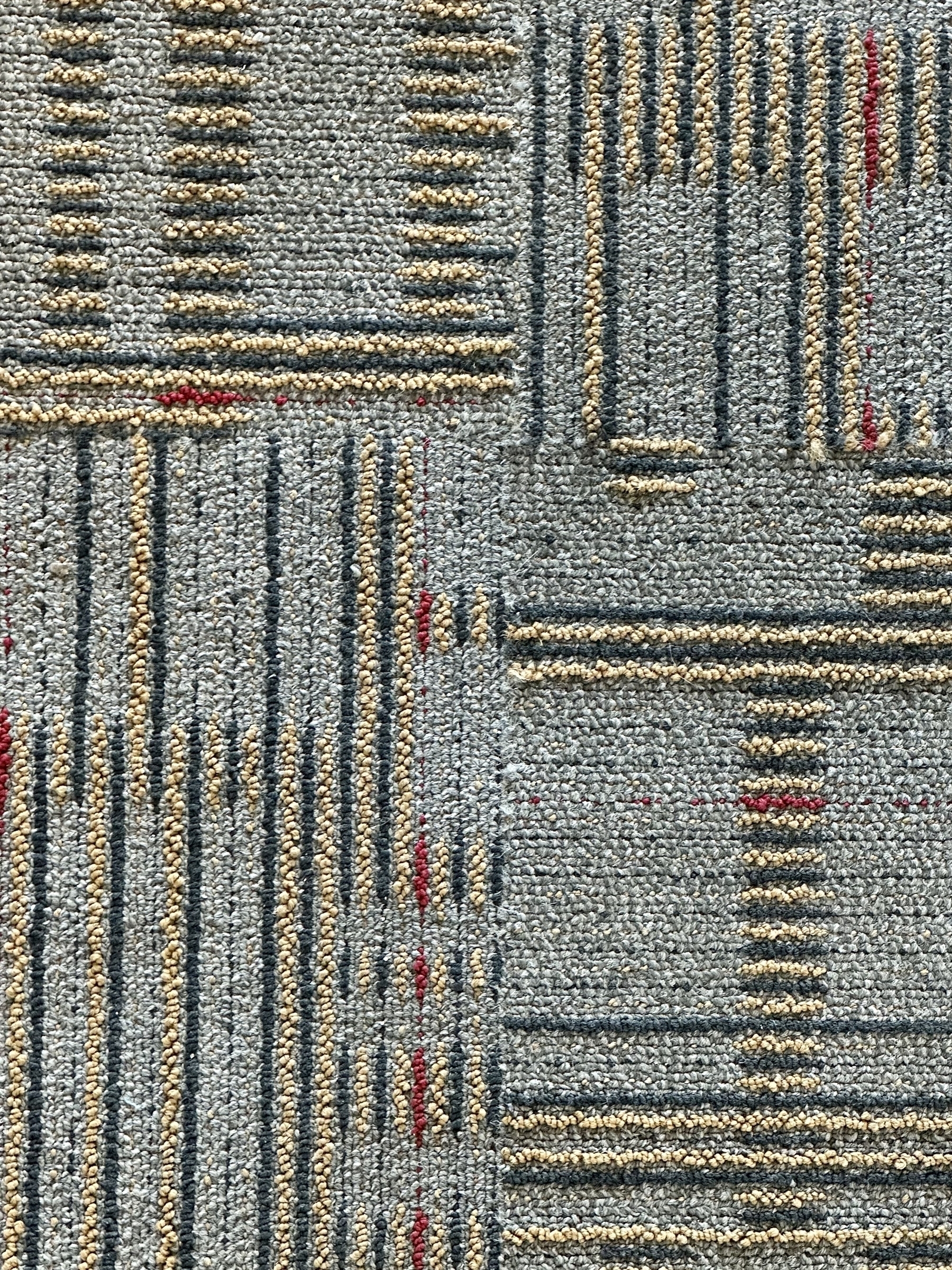
Boarded then left a broken JetBlue plane, and noticed how… ugly abstract the carpet was while waiting at the gate.
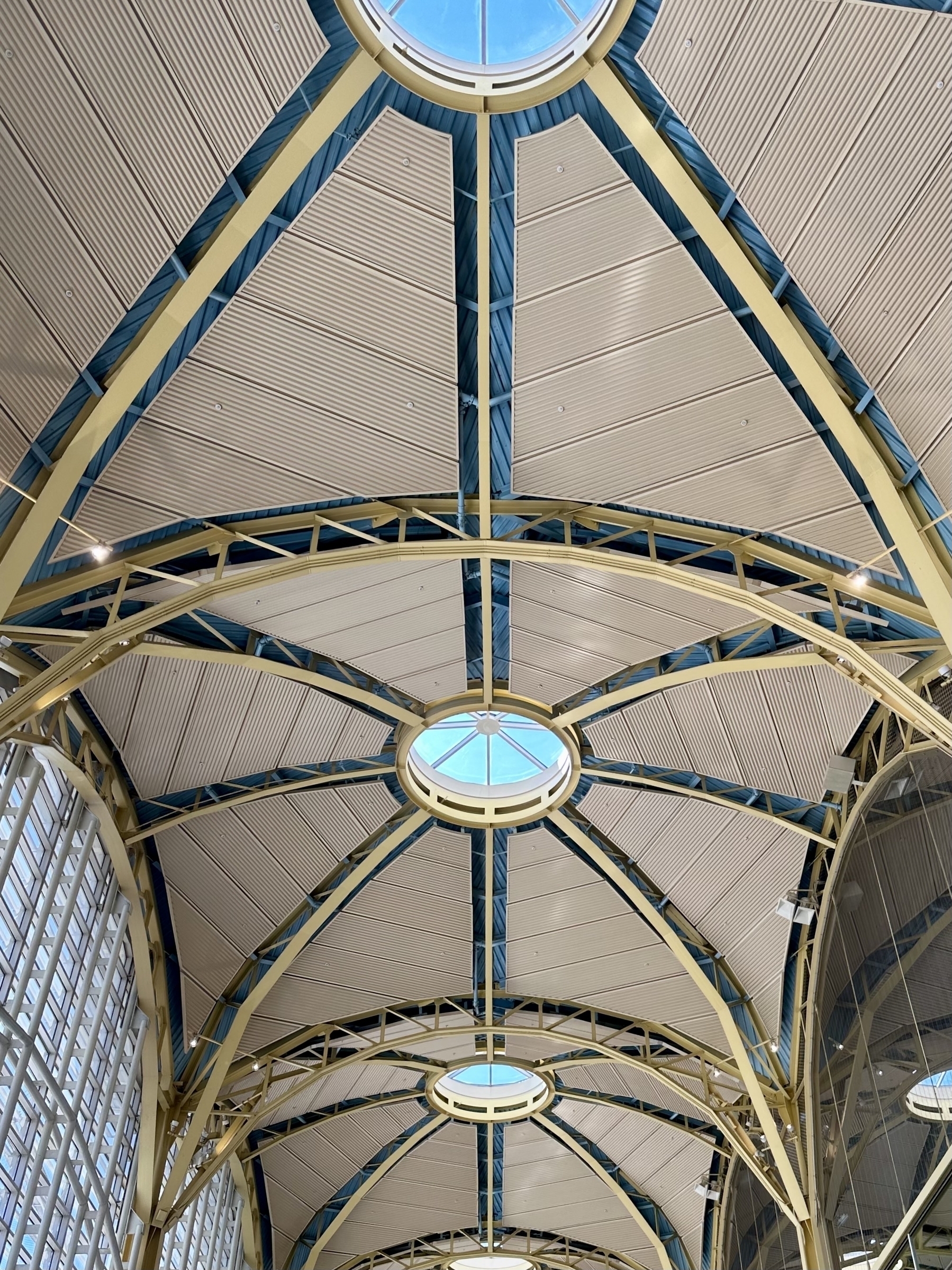
When traveling through Washington National airport, looking up is so much more rewarding than looking down. Not as safe, of course, but beauty comes with risks.
These were supposed to be Notes from a 6-hour trip to Boston, but mechanical issues delayed the inbound flight by 4 of the 6 hours, and since this included the 90 minutes during which I was supposed to talk (for 20 minutes) answer questions (10), and attend a panel (30), the lecture had to be pre-recorded and the questions will have to wait another day. So anyway:
Despite the delay, I have to give kudos to JetBlue. I am not their frequent traveller — though that is now likely to change — and my status with them is “Group F”, yet they refunded the entire trip without fees and gave additional credit for the inconvenience. The gate staff was on top of reshuffling people with connections to different flights and they handled some heated situations with poise. Granted, I may have been more heated myself had the trip been higher stakes, but had it been higher stakes I would not have had such a tight itinerary. Hurray for risk management.
The stakes are not high because I was able to pre-record and send out the talk as soon as I realized I would not make it there on time. Now, could things have gone better? Yes: using AirPods to record over the background airport noise led to less than ideal audio, and a few times I had to yell over a person who decided to take a phone call right next to me, but hey, it’s a free airport, I hope we had annoyed each other equally.
Speaking of sound quality, of course there is a study that shows that poor audio quality leads to distrust (sponsored by Shure, by any chance?). The original article had some 200 of Amazon’s “mechanical Turks” — what a charming way to describe low-wage digital labor — listen to manipulated and clear NPR recordings and grade them by how trustworthy they were. Now, this rhymes so much with the now-debunked study of illegible text leading to better retention due to increased focus that I’ll decide to throw all of it onto the ever-growing pile of things that just don’t matter, and will keep telling myself that my sub-$100 Samson is more than enough, if I just used it more.
But anyway, it is a good idea in general to pre-record your talks — maybe during a practice session? — and save the best take for cases like this. It will also help you get rid of ticks both verbal and facial which you won’t even notice until you see yourself speak. Nowadays even PowerPoint has built-in recording.
“Welcome! Play Safe,” reads the sign at a Fairfax County Public School playground in Virginia, just outside of Washington, D.C. The sign also lists a few simple rules—21 of them, by my count.
Although, to be fair, the background of my favorite sign ever was green.
The accompanying photo shows the playground sign, versions of which I’ve been seeing so much they’ve become part of DC’s atmospheric noise, like ambulance sirens, or screams of people who may or may not be experiencing homelessness but are definitely experiencing a psychotic episode: crowded white text on a screen-of-death blue background trying to codify common courtesy.
Skenazy’s Let Grow partner Peter Gray had the best comment:
“The only restriction that needs to be added to make them complete is ‘No Playing,'”
And of course, at least one person in the article mentions that these signs are there to “mitigate the liability of the entity responsible for the playground (school, municipality, etc.) in the event they are sued.” This just in case regulatory creep is apparent everywhere, medicine being the prime example, and the expanding size of clinical protocols yet another. Yes, we have Choosing Wisely, but how about Regulating Wisely?
I’ve recently had to do a simple but tedious literature search: finding the incidence and prevalence of a handful of rare diseases, using only peer-reviewed articles as reference. The perfect job for AI, some would yes. Well, yes for an AI, but apparently not for LLMS.
I am a proponent of using LLMs as tools of the spellcheck sort, but they are still not ready to act as serious research assistants. Bing presented me with gobbledygook that ended with a repeating string of “KJKJKJKJ” or some such — and no, my prompt was not for it to pretend a cat was walking over the keyboard — while Bard gave a beautifully formatted table full of inaccurate numbers and fake references. Correcting it would have taken more time than doing the research myself.
Which is to say: I anticipate a lot of angst when incoming students start passing off unadulterated LLM work as their own in anything that’s not a business writing course.
August 30, 2023
Finished reading: The Dao of Capital by Mark Spitznagel 📚 about which I will have more to say later — the weekend can’t come soon enough — but how fitting that a book on the Austrian school of economics is written in an extremely roundabout way, and with such German syntax. But that’s OK!
My fellow NCI-trained oncologist, friend, and occasional co-author Vinay Prasad had another appearance on my favorite podcast, and I’m happy to say that the result is a contender for the best EconTalk episode of 2023. It is all about cancer screening, but also about decisions, paternalism, and regret. No mention of Covid — thankfully — and Russ Roberts mostly listens but then asks the most poignant questions that result in some spirited conversation.
The word not mentioned — a surprise since Russ likes to pull in Talebisms whenever there is a good opportunity — was ergodicity. Or rather, the non-ergodicity of medical interventions: there may only be a 0.01% chance of death with a procedure, but if it happens to you, you are 100%, not 0.01% dead. People I don’t do well with negative definitions and it would be nice if there were a separate word for non-ergodic processes, like there is for antifragility.
Another missed opportunity is to discuss efficacy — the outcome of a procedure in ideal settings — versus effectivness, which is how procedures behave when you let humans do their human things en masse. Even with that, it is a great episode, do listen, and maybe take some notes along the way.
Reading Adam Mastroianni’s latest article, about the vacuousness of psychology, and it looks like the world is ready for psychohistory. Now if only we had an intelligence greater than ours to develop it…
August 28, 2023
It’s the first day of school in DC, and we now officially have a middle-schooler in the family. I need to watch Eight Grade (2018), if it’s not already out of date by now. Tempus fugit…
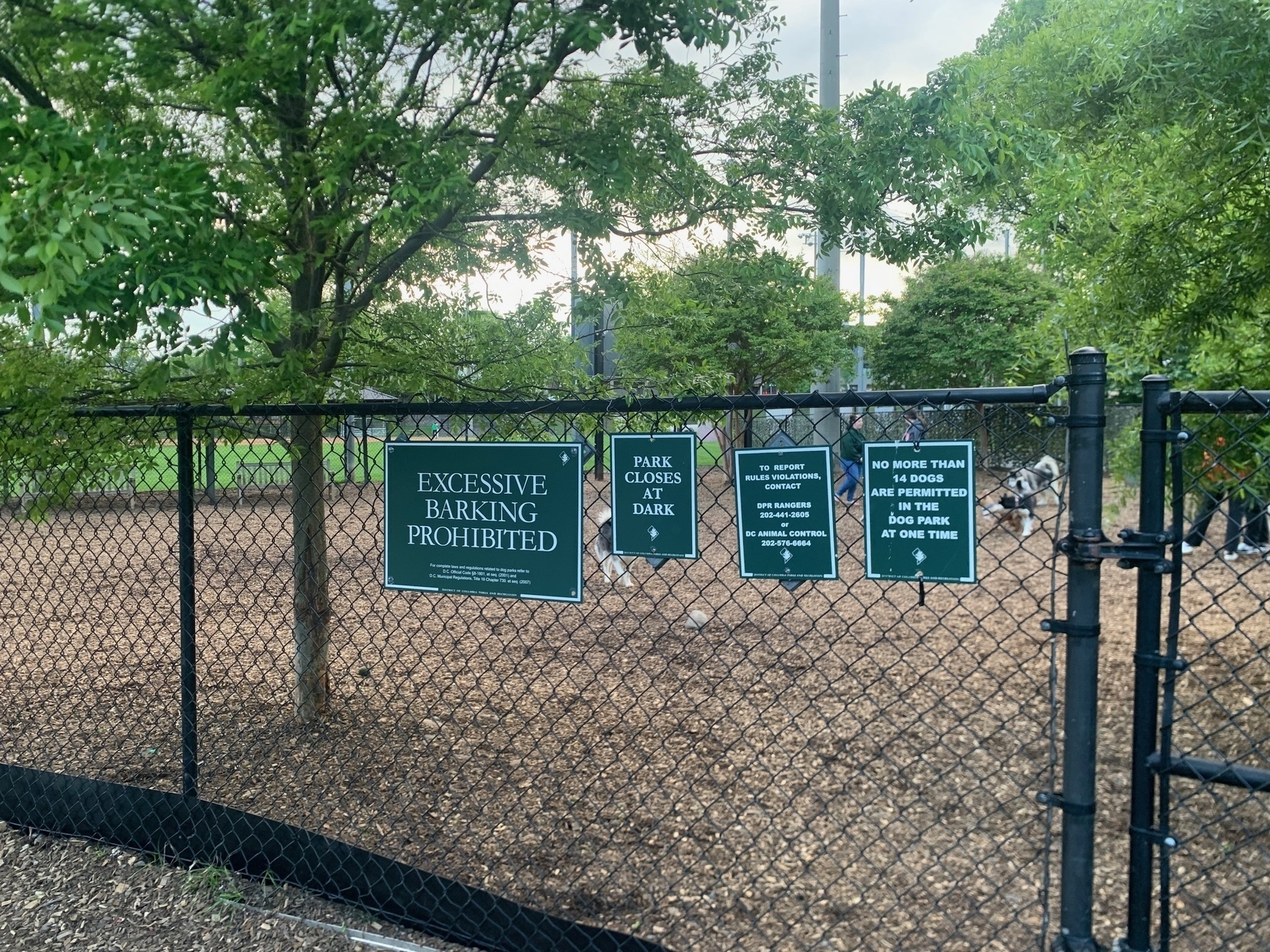 Although, to be fair, the background of my favorite sign ever was green.
