🍿 Three Thousand Years of Longing was an unexpected delight. If the theme of Fury Road, George Miller’s previous, was chase, the theme of Longing is story, within a story, within a story, masterfully weaved and presented without irony. More of this, please.
There are two and a half books here for the price of one in this note-keeping samizdat:
one: a brief practical guide on how to make an analogue note system;
two: an exhaustive list of more or less science-based reasons for why you would pick analogue over digital;
and a half: the author’s self-conscious and slightly over the top running commentary about it all.
The first one was spot on and valuable. The second needed an editor: repeated paragraphs were peppered throughout the chapters a few too many times for me to find it just charming. But an editor may also have cut the commentary, which ended up adding some sparkle — lacking in most other non-fiction books.
Better than expected, even after accounting for low initial expectations.
See number 24 here
January 14, 2023
🍿 White Noise starts off as a Wes Anderson and almost finishes as a David Lynch before veering off to a Little Miss Sunshine finale. There are stops at Allentown, Hitchcock City, Bruckheimerville, and many others along the way. Enjoyable, if a bit too self-serving.
done incorrectly,
There are no open-ended questions on the real USMLE.
which it didn’t actually pass,
and which were reported in a pre-print.
Which isn’t a complete knock against the study per se, but even a glance at it shows that some questionable choices have been made regarding the scope — there were only 376 publicly available questions instead of more than a 1,000 on the real exams — and the methods used to ensure the publicly available questions hadn’t already been indexed by the ChatGPT training algorithm.
To be clear: this is my complaining about misleading headlines, not saying that predictive AI wouldn’t at some point be able to ace the USMLE, that point not being now, for reasons stated above. And let’s not even get into whether having a high USMLE score means anything other than the person achieving a high score being a good test-taker (it doesn’t).
January 13, 2023
Tech trouble update: LG’s only way of communicating is via phone calls at unpredictable times from unpredictable numbers without the option to call back. The projector repair is therefore still up in the air.
On the other hand, since I had to turn off silencing unknown callers, I have become exposed to the wasteland that is the American phone system. It is like a George Saunders short story: robots, aliens, and the ocasional lifeless middle-aged salesperson. LG, why do you torture your customers?
And with that, the Twitter chapter of my life has closed.
May 2008 to January 2023. Not a bad run, considering.
Instead of setting a Yearly Theme
A CGP Gray video is where I first heard it used as a replacement for New Year’s resolutions, but I’m not entirely sure if he’s the originator. right at the outset, I let it crystalize on its own in the first few months of the year. The theme of 2022 was shelter-building — guess where that came from — and as a result we now have a whistle-clean basement ready to serve as a home gym until a nuclear strike anhilates us all.
Odds are that this year’s theme will end up being statistical shenanigans. First a brief letter to JAMA Internal Medicine we wrote received a confused commentary from a giant of cancer care that showed that even oncology giants are not immune to errors
Finding the error I will leave as an excercise for the reader; I do, however, plan to address it in a follow-up letter. Never pass an opportunity to increase your publication count! of statistical reasoning. Soon after that, working on a different — still top-secret — paper got me down a rabbit hole of the many ways we use to present clinical data. I thought these were lacking in oncology; other fields of medicine showed me that there was room for further deterioration.
Not to be so secretive about everything, but clinical data representation in this particular field will also be the subject of a commentary. And yet, the US FDA still thinks statistically illeterate doctors — present company included — are important gatekeepers of diagnostic tests, essentially banning home test kits available in other parts of the world because they are worried people are too innumerate to correctly interpret their own results.
Humans being pattern-recognition machines, I don’t doubt I will continue seeing matemathical malpractice, malfeasance, and just plain stupidity everywhere I look. It is pretty much guaranteed I will inadvertently comit some myself! I hope this yearly theme results in a few papers, at least.
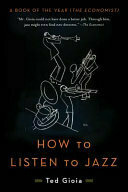
Always wonderful to read experts in their craft writing about it. Two dozen pages in and I am already picking up on concepts beyond jazz, efortless teamwork versus dysfunctional prima donnas being broadly relevant.
January 11, 2023
Finished reading: On Bullshit by Harry G. Frankfurt 📚
A timeless masterpiece that takes less than an hour to read, much longer to digest. What reminded me of Frankfurt’s essay was an article about the age of the bullshitter which, alas, ended up being its own kind of bullshit.
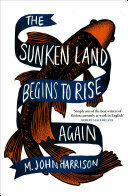
A story of damp decay. I didn’t know enough about English geography to fully appreciate the intricacies, but Harrison is the master of the uneasy atmosphere and he got that one just right.