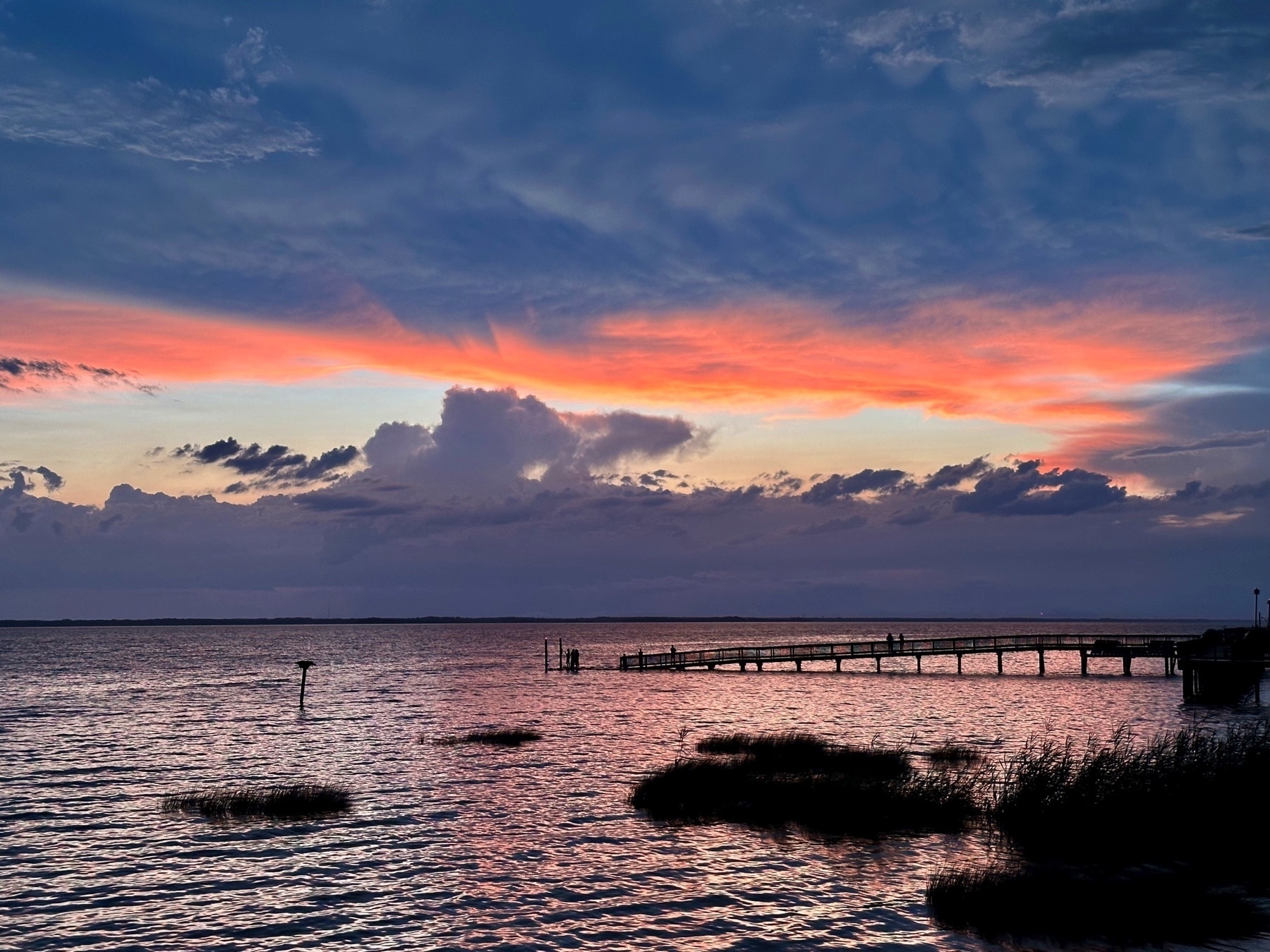
Duck (🦆), North Carolina.
D.C. Revamps Driver’s License Design:
“USA” was added directly next to Washington, DC on the top left, making sure that TSA agents, bouncers, and other security gatekeepers know the District is indeed part of the United States. The cards once read “District of Columbia,” which confused some.
Only in America.
🏀 USA Basketball starts fresh with new players and coach for FIBA World Cup:
USA Basketball has won gold at the past four Olympics but is seeking to avenge an embarrassing seventh-place finish at the 2019 FIBA World Cup in China, where an underwhelming roster lost to Serbia and France.
No shame in losing to the homes of Nikola Jokić and Victor Wembanyama, even though the first didn’t play and the second was still in diapers back then.
Reading my post from yesterday one may think I have something against Smith Island, Maryland. Nothing could be further from the truth! Between the nature, the solitude, and the food, it has been on our list of places to visit for the better part of this decade. Stars seem to be aligning for August of this year, so fingers crossed.
We have been watching some videos in preparation, and An Island Out of Time (YouTube link) were 25 minutes well-spent. The island has been getting less and less hospitable for humans compared to the mainland, and it has nothing to do with its supposedly sinking.
Another one on our travel list: Calvert Cliffs State Park — home to the most fossils per square foot on the East coast, and neighbor to the state’s only nuclear power plant.
Chesapeake Bay is a natural wonder of the world and Maryland has its best parts, making it clearly the best state in the union — no contest.
Duck (🦆), North Carolina.
This morning’s story in The Washington Post on a slow-rolling climate disaster has this as the subtitle:
Maryland’s iconic Smith Island faces one of the nation’s most dire forecasts for rising seas, but real estate is booming
In the story we learn that the “booming” real estate market means that
More homes have sold on Smith Island in the last three years than in the previous 11 combined, according to sales data.
…
Woutila and Pueschel lived in the Baltimore suburbs for years, but she always dreamed of living on a sailboat and he of owning waterfront property. As they scouted real estate listings, they hit upon a marshy plot in the middle of the Chesapeake: Smith Island.
Waterfront homes run roughly from $100,000 to $200,000 — far less than most spots on the mainland — so it was one of the few places that fit the couple’s budget. In comparison, a two-bedroom condo on the water in Annapolis recently sold for $530,000 and a small home near a dock in Shady Side, Md., went for $360,000.
Framing is everything: a journalist’s “real estate boom” is a thinking person’s exodus.
If there was my type of a long-form article, it would be the making-of any complex project. Like of The Last Unicorn (via Robin Sloan), or Back to the Future (warning: Twitter thread), or Frasier (to which I keep coming back).
And I have never even seen the first one — though I do plan to now!
This is our second time traveling to the Outer Banks. [Note: Henceforth OBX. ] The first was seven years and two children ago, when I attended a grant-writing workshop held at an upscale resort in Duck, NC.
We were further down south this time, in Kill Devil Hills, [Note: Yes, these are actual town names. There is also, of course, Kitty Hawk, as well as Nags Head. I’ll take those over European place names — looking at you, Vienna VA — any day. ] in accommodations that were decidedly more homely — and it was great!
On vacation in Jockey's Ridge state park, sun-block mode activated, shot on an iPhone.

“After ‘Barbie,’ Mattel Is Raiding Its Entire Toybox”:
I.P.-based filmmaking has become so commonplace that Gerwig—who made her name acting in tiny mumblecore projects—was caught off guard by complaints that she’d sold out.
I.P. being, of course, the acronym for intellectual property — amusing, since there is absolutely nothing intellectual about the properties in question. The movies have never been so colorful yet depressing as they are now.
I recently attended a residency graduation party at an academic medical center, for the first time since the pandemic. Two things struck me:
Award inflation is akin to grade inflation: they have become currency for further post-graduate training and, more importantly, faculty promotion. With the recent focus on diversity, equity, and inclusion, a whole new spectrum of accolades has opened up. So yes, there is a reason for all those plaques being thrown left and right, but it was funny nevertheless to see faculty speed through the list of graduates, then spend the next hour patting themselves on the back.
The lack of a proper roast was more concerning. Has the environment become so fraught that the residents are concerned about offending anyone? Humor is to dialogue what beavers are to a river: sometimes a nuisance, but also the hallmark of a healthy ecosystem. Or should I say good humor; when done lazily and as an afterthought, roasts too often devolved into a series of racial and sexual stereotypes. I imagine that is why some places have done away with them, which is also a lazy, unimaginative thing to do — you would think that with all the stress on DEI, the graduates would if anything be more capable of doing a character/personality rather than race/orientation-based roast.
What I hope DEI workshops did not teach them is that they should go out of their way to avoid making people uncomfortable. Sometimes people should be uncomfortable, and making them squirm just a little bit at the highest peak of their career-to-date is the best time for it. They will have the entire rest of the night to pat themselves on the back.