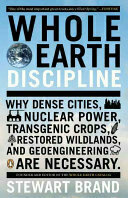
Currently reading: Whole Earth Discipline by Stewart Brand 📚
Slowly realizing that the aversion to nuclear power may be the biggest folly of the baby boom generation. And there are so many to choose from!
As two of our three offspring lay in bed with fevers, a thought comes to mind: could covid have caused this never-ending chain of infections which began last fall, during which a week rarely goes by in which no one misses at least one day of school because of illness? Has it destroyed our immune systems, made us more susceptible to other infectious diseases? There is, after all, no end to articles in press both professional and lay which warn of long-term effects of SARS-CoV-2 on various lymphocyte subsets.
Well, no. Or at least highly unlikely. A 5-person household with three school-aged children will have one respiratory virus or another circulate a full two thirds of the year. With our youngest starting PK3 last fall, we have become that household, and 65% sounds about right.
Woe to us and anyone who visits our little Petri dish.
Project Tailwind — Google’s answers to DEVONthink, Obsidian/Roam, and ChatGPT rolled into one — has the potential to be the best thing that has happened to academic research in decades. Of course, coming from Google, I fully expect it to be gone and forgotten in a year or so.
On the topic of firsts, here is my first Tweet, linking to a rather funny New Yorker article.
It garnered exactly one “like”, from — and this is where my trip to the archives took a dark turn — someone who is no longer with us. So it goes…
The first article I ever saved to Instapaper — 11 years ago, three years after it was created and quite some time before it turned into my personal graveyard of text — was AOL Hell from the now defunct The Faster Times [Note: The link is to the Wikipedia entry which, strangely, says that as of February 2018 the url belonged to someone in Serbia. An odd coincidence. ] . The titular hell is the one AOL created for the employees producing content for its text mill. Writes Oliver Miller:
My “ideal” turn-around time to produce a column started at thirty-five minutes, then was gradually reduced to half an hour, then twenty-five minutes. Twenty-five minutes to research and write about a show I had never seen — and this twenty-five minute period included time for formatting the article in the AOL blogging system, and choosing and editing a photograph for the article. Errors were inevitably the result. But errors didn’t matter; or rather, they didn’t matter for my bosses.
This is, in fact, why AI will destroy the Web as we know it. And if you have any doubts about the outcome of Large Language Models being set loose on the internet, well, AOL wanted to do it even before it was trivial, destroying a few humans in the process:
The document reveals the same attitude that the bosses at the old Ford Motors factory had, when the assembly line was first introduced. Every week or so, the assembly-line was sped up; incrementally, barely noticeably, but the increase had a staggering, cumulative effect, and soon, those workers who couldn’t keep up found themselves standing by the wayside. If AOL could find a good way for machines to write about Lady Gaga, they would almost certainly fire the writers who remain.
They now have the machines, folks… They have the machines.
Mr. Miller can now be found on Medium, writing poetry.
My decoupling from Twitter continues, with all of the 9K+ tweets now available on micro.blog. What use they could possibly have, I will leave as an exercise to the reader.
A beautifully designed essay about an ugly entity: dark patterns. I’ve never heard of The Pudding before, but it seems like they do good work.
And in some positive news — can you imagine those still exist? — the US Food and Drug Agency has issued their draft guidance on decentralized trials (PDF download). America is playing catch-up with the UK in this regard, but better late than never!
Currently reading: Whole Earth Discipline by Stewart Brand 📚
Slowly realizing that the aversion to nuclear power may be the biggest folly of the baby boom generation. And there are so many to choose from!
I just learned about Bike — from Brett Terpstra, who is back blogging and we are all better for it — and outlining will never be the same. Just look at the way it does text formatting, typing affinity in particular, and tell me you don’t want it in all your WYSIWYG apps (looking at you, Word).
A modest proposal: institute gun tax. Use the money to fund schools (or better yet, school vouchers).
Prompted by recent events which, although on the other side of the Atlantic, hit too close to home. You’d have a hard time convincing me they weren’t directly influenced by American gun culture.