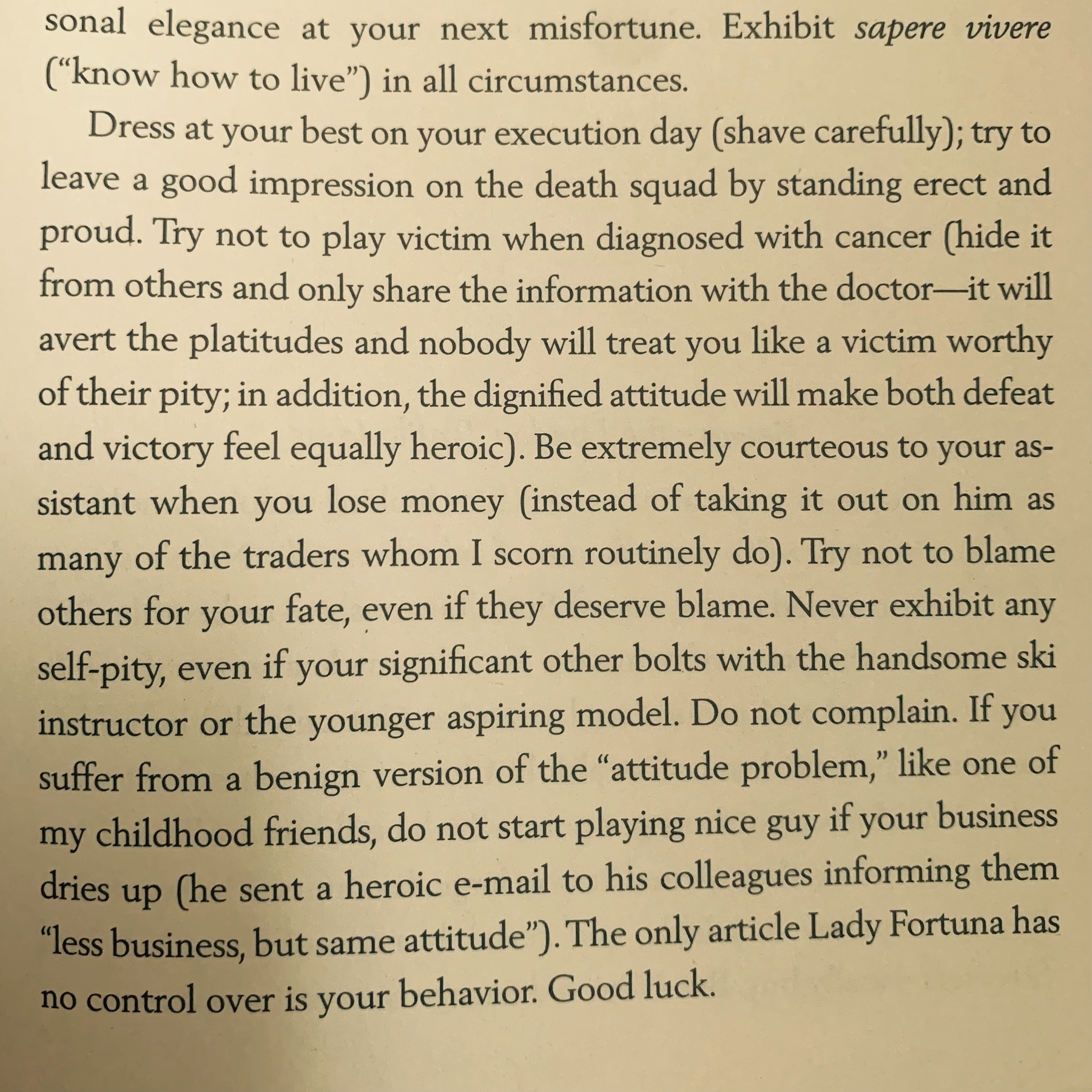
📚 The last paragraph of the last chapter of Fooled by Randomness, and I can’t read it without thinking about Norm Macdonald.
Donald McNeil, formerly of the New York Times, wrote a primer on the monkeypox outbreak which is well worth the 10 minutes' reading time. The bottom line: not great, not terrible. For now.
“This was an ambitious report recommending all sorts of ways to reform government, but no one was given a mandate and timeline to actually carry out the recommendations.”
Thus ends every attempt to reform administrative burden of research, according to the Good Science Project.
📚 The last paragraph of the last chapter of Fooled by Randomness, and I can’t read it without thinking about Norm Macdonald.
“The Reproducibility Project: Cancer Biology was an 8-year effort to replicate experiments from high-impact cancer biology papers published between 2010 and 2012.”
Out of 193 experiments from 53 papers, only 50 (26%) were successfully reproduced, and in those the effect sizes were 85% smaller on average. Scientists at Bayer did the same thing 10 years ago, with identical results: only 20-25% of experiments reproduced.
With foundations like this, it is amazing that there has been any progress in the clinic.
“Lazy columnists rest a sweeping argument about political ideology on a tossed-off missive they heard one random person (not a public figure) utter online.”
Lazy journalism is a dominant negative mutant, destroying any benefit good journalism (like Warzel’s column!) brings.
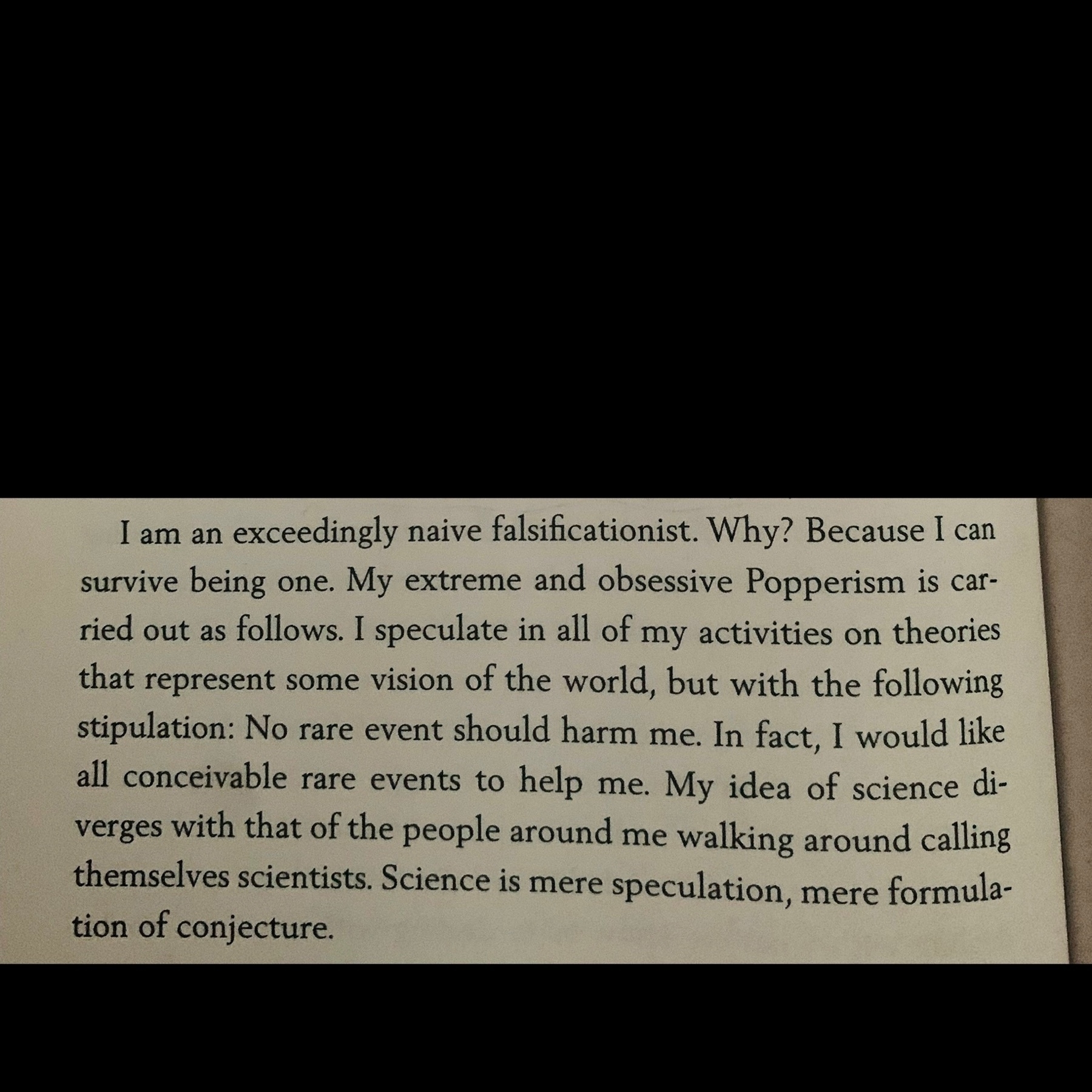
📚 Halfway through Fooled by Randomness, the seeds of Antifragile. It’s all one work, all that’s missing is cross-references from earlier to latter written parts.
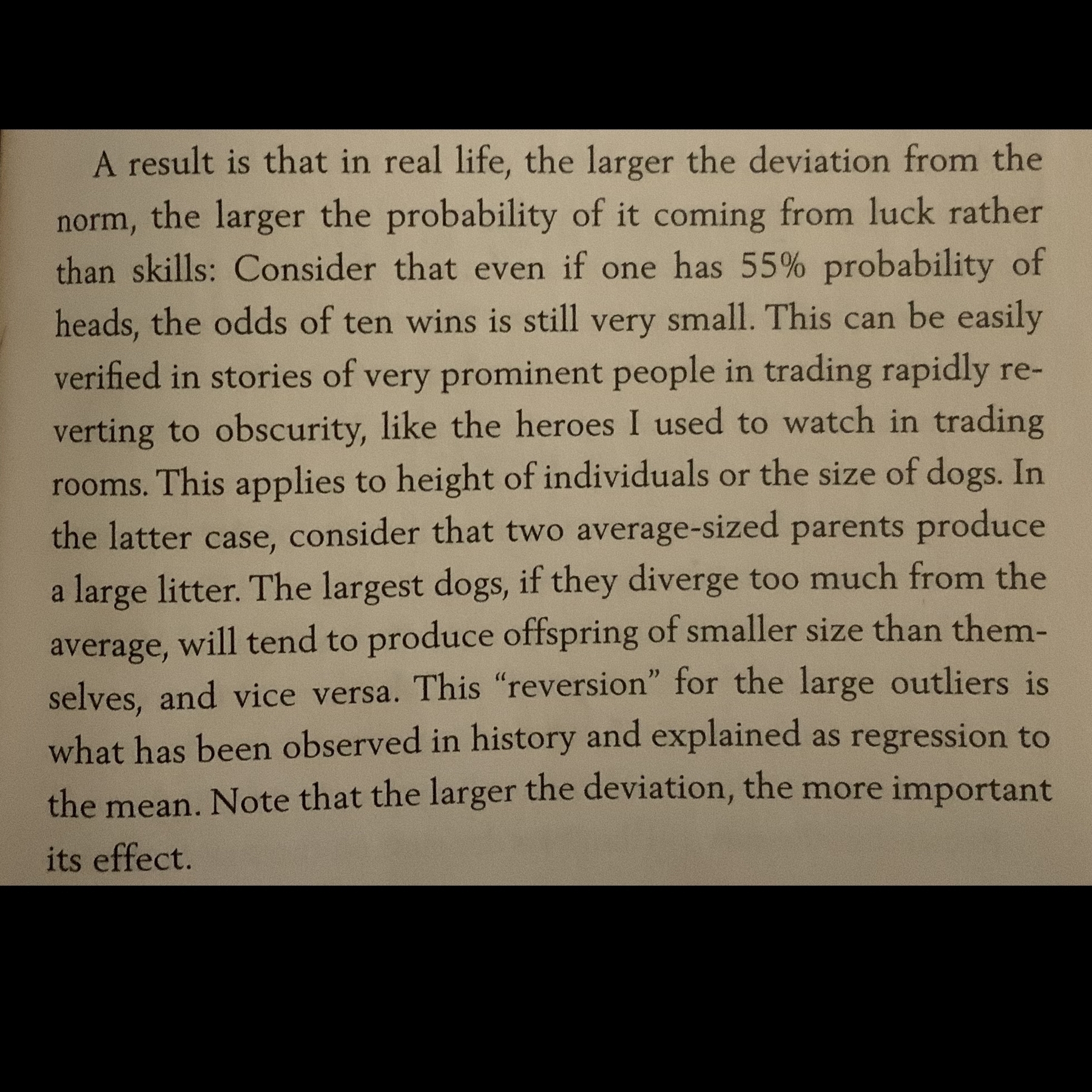
📚 On regression to the mean in Fooled by Randomness. Beware the uncontrolled phase 2 data, especially ones with surprisingly large effect sizes.
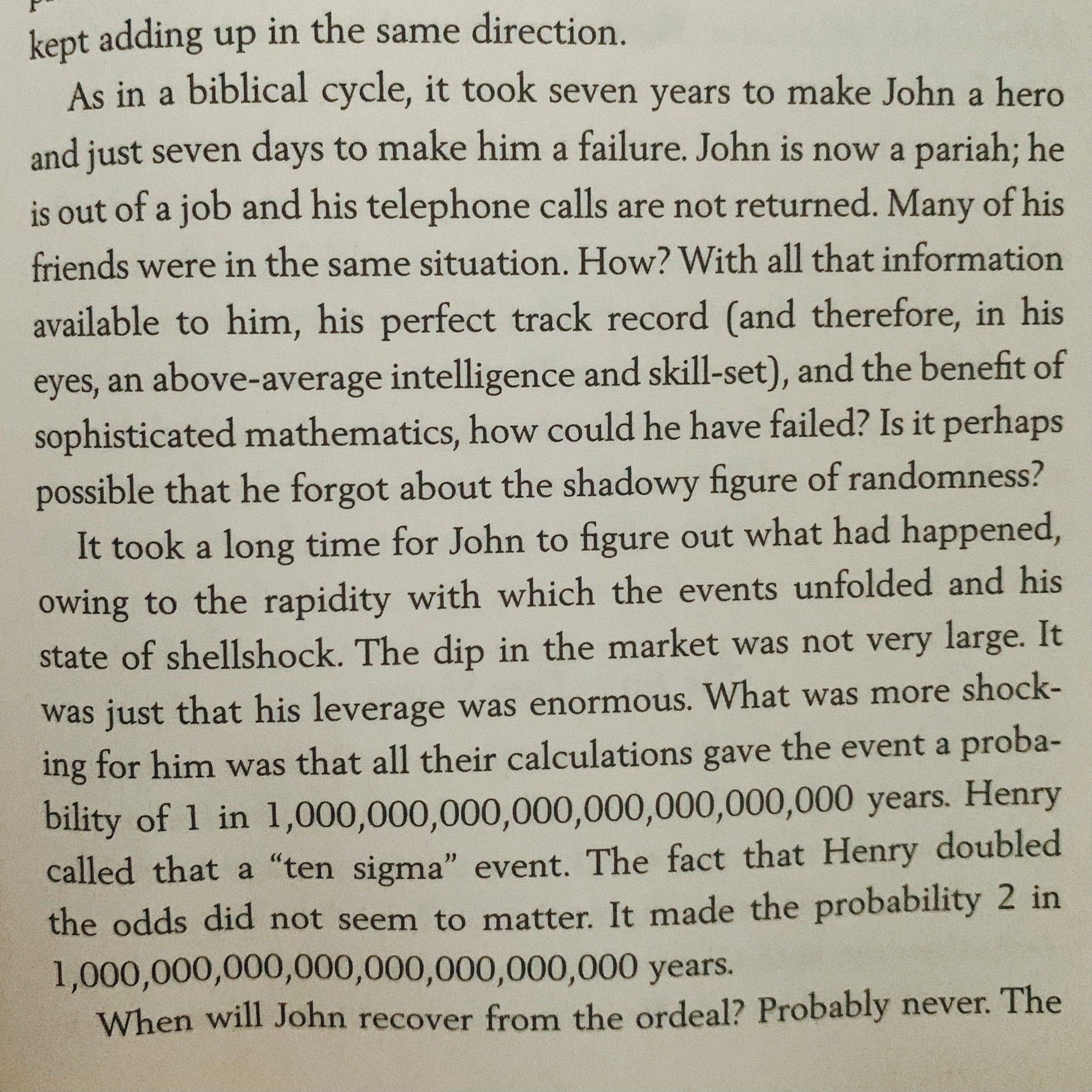
📚 Catching up with John, the busted high-yield trader in Fooled by Randomness.
If you are talking about a 10 sigma event you should have thought in alphas, not sigmas. There may be early hints that the data is not Gaussian but people call them outliers and brush them away.
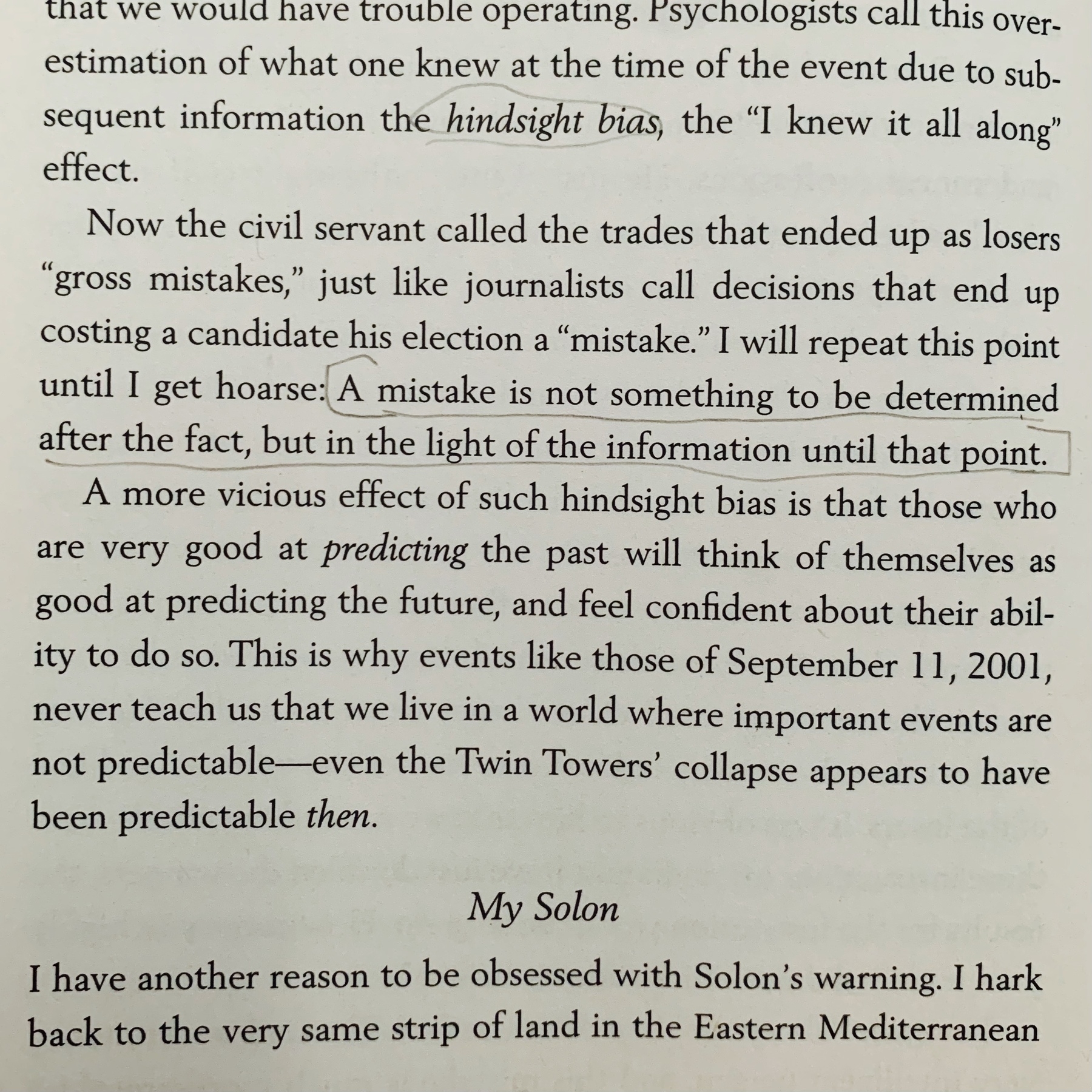
📚 Fooled by hindsight bias. This one is for anyone who thinks lockdowns and school closures in the spring of 2020 were a mistake.
Making ex post “predictions” is infinitely easier than ex ante, and gives you a false sense of confidence to boot. Dangerous and stupid.
Several imprecisions in this essay on IRBs should not detract from its key point: social sciences don’t need IRB oversight, biomedicine needs it to be less byzantine and more transparent. Status quo is untenable.