Last week I shared a brief reflection on a tiny aspect of my commute.
Please check it out it if you haven’t already, it is a quick
read.
Wasn’t that nice? It started by introducing some old concepts in a
new light—you knew about trains before, and maybe even knew there was
a MARC Penn that line goes from Baltimore to DC, but probably didn’t
know the specific trains and their timetables. Then it gave you a
coherent explanation of a phenomenon you hadn’t known about before. This
first caused slight, but not unpleasant, cognitive strain while you
were figuring out what I writing about, followed by the small pleasure
of an ah-hah moment once the pieces clicked.
It was a brain massage, if you will. It was also complete bull.
Not that anything I wrote was wrong, as far as I know, but I didn’t
give many arguments for it being right, either. There were no ridership
statistics or arrival times to back up my claims. And even if there
were—I didn’t give any alternative hypotheses to explain the situation,
nor reasons why those would be less likely than my own explanation. When
you think about it, it was more of a brain Twinkie than a massage—all
empty calories, with a fleeting feeling of fullness.
Welcome to 99.99999% of the written word, and to anything ever spoken
out loud.
We like stories. They need to make a threshold amount of sense (this is
why societies universally ostracize schizophrenics). They should contain
an element of surprise (it is not that the 7:07 train would come later
than the 7:23—twists like that do not surprise anyone any more—it is
that it comes in much earlier because people think it wouldn’t). And
they get bonus points if—as my last parenthetical implied—they paint
the others as stupid or incompetent. There are many more checkboxes;
more of them checked, the better the story.
Most professions are based on storytelling. Doctors tell different
stories to their patients, each other, and themselves—as do most other
scientists, to a different degree. Lawyers tell stories to their clients
to make them believe they will craft good ones for the judge, jury, and
the opposing side. Ask a marketer what makes a good commercial (spoiler:
story).
Being a coal miner doesn’t involve telling stories. No one wants to be a
coal miner.
Our minds prefer a good story over a true one, and will have us believe
it more, too. However, the more boxes you see checked, the more
suspicious you should be that someone manipulated the tale to make it
more pleasurable, ergo memorable, ergo believable.
(So, if what you’ve just read made sense…)
If you are looking for an objective truth—or getting as close to it
as possible—any medium that involves audio/visual queues will be an
impediment. Sights and sounds stir up emotions, and emotions prime us to
believe or not to believe. Pay attention to the background music in a
documentary, or how the desk of that shifty lawyer they’re interviewing
is a complete mess.
TV news is, of course, a joke—this is why comedy shows are becoming the
most popular delivery form.
Written word has its own way of deceiving—anecdotes, incomplete data,
misquotes, lazy references—all to make a better narrative. Just read
anything by Malcolm Gladwell. And look at the time it takes to get
to the bottom of just one tiny factoid in that story of the iron
content in spinach. Finding truth is exhausting and exasperating, and people whose
job it is to find it (hello, accountants) are way less fun than those
who make stuff up. Mark Twain said it best:
A lie can travel half way around the world while the truth is putting on its
shoes.
Misquoted? Most likely. Or is Huff Post wrong? It wouldn’t be the first
time.
There is nothing in this post that bigger and better minds than my own haven’t
written about already. But
that’s a boatload of pages! Not many people have the time, discipline,
and interest to read all that—and even if they did, they would keep
making the same mistakes over again, as shown in several studies
described in those same books (yes, yes, all studies are flawed; one
windmill at a time, please). These things are hard-wired, and for a good
reason—evolution doesn’t care for objective truths.
Or maybe it does. I don’t know, I’ve just made it up.
Here is a screen grab of the the Marc Penn line southbound schedule.

Note train 415, departing Baltimore Penn at 7:00 (I get on at West
Baltimore, so in my mind it’s the 7:07 train). Also note train 517—my
7:23, and the times they both arrive at Washington Union Station.
Is it ever worth taking the 7:07?
Well, actually, yes. Because:
- Most commuters look at the schedule and make the same conclusion that you probably did: waking up at least 16 minutes earlier in the morning is not worth the 7 minute lead time you get in DC.
- With that in mind, even if they leave early they don’t really rush to the 7:07; therefore significantly fewer people need to get in at each stop compared to the 7:23 and it usually gets to Union slightly ahead of time.
- Because of more people waiting on the 7:23 it tends to limp along in the last few stops and doesn’t get to Union until 8:15 in the best of days.
- The 15-20 minute difference does mean a lot if you have to use DC’s abysmal metro which gets crowded by the minute between 8 and 9.
These are the sorts of things you think about when your commute is almost two
hours each way. If you would like to read more about extreme commuting (and who
wouldn’t?), this old New Yorker article is a good place to start.
Also, this is happening:
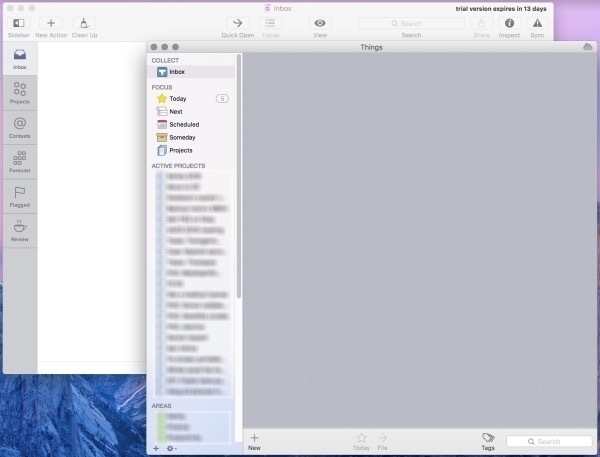
Or it may happen, eventually, when I get to it. Probably close to the trial
expiration date, if ever.
Sigh.
This website is:
- a public repository of articles, lectures, and other original works I authored or co-authored;
- a place to repost comments, reviews, and recommendations I wrote on other sites (like Quora, Amazon, etc);
- a place where my half-baked ideas and philosophizings go if I think them interesting enough for general consumption.
This last one is what gives me trouble. Ideally, if I think a
topic is worth writing about, I should make the extra 3-day
effort to gather references, edit it nicely, and have it
published. But like the character in “The bridge on the
Drina” who
means to be the town chronicler but can never find an event worthy
enough to write about, most subjects have me less excited the more I
think about them. By the time I finish a blog post, then, I have no
intention to revisit the matter.
This is an excellent filter against appearing foolish in print, but horrible for productivity.
Two solutions come to mind readily, with equal chances of failing—either stop posting the third category of articles altogether and start writing everything with an intention of publishing; or start writing even more with the hope that at least a small percentage of that will turn into something a journal would accept for publication.
The former is a set-up for procrastination, the latter—doing extra work in a hope to create material for even more work—oxymoronic. I will try both and see where I end up.
Two years ago, I haplessly expressed excitement about my task list manager of choice being updated soon.
It hasn’t yet. Two iterations of iOS and an Apple Watch later, Things 3 is still
not available, and I am becoming increasingly annoyed. Inside my mind, two kinds
of costs—Ms. Sunken and Mr. Opportunity—are battling it out.
Mr. O has me thinking about time wasted on not being able to turn a next action
into a project; or having to make too many taps to edit anything in the iOS app.
And then I stress out even more contemplating all the features I don’t even know
I’m missing out on—not wanting to find out about those is why I not dare read
reviews of the competition.
Ms. S, meanwhile, is raising dread whenever I thinking about moving to Omnifocus, Taskpaper, or whatever the GTD app du jour is—knowing that I would be trading a set of known deficiencies for a potentially grater set of unfamiliar ones.
The mister and missus are irrational beings—even though Things 3 remains
vaporware, there have been a few 2.x updates that iOS7-fied the experience—from
going flat to adding extensions and notification center widgets. All that
considered, I should not
spend so much time thinking about an app.
And yet, it is 6pm on January 2, 2016, and instead of writing about getting back to the lab, finally finishing the PhD thesis, or being a haughty gastro-tourist in unseasonably warm New Orleans, I am being much too first-worldly for my Balkano-Serbian comfort.
Which I will add to the pile of absurd reasons for why I dislike Cultured Code.
John Siracusa is a programmer. Merlin Man is
a lifehack guru-cum-internet personality. If you
are in a medical field, there is no particular reason you would know
them.
They co-host a podcast that modestly has themselves as the
subject matter. It is one of the best new podcasts this year, second only to
CGP Grey’s (though with Road Work coming out this week,
it may be a three-way tie). In this week’s episode, Siracusa had this to
say about programmers (link to the audio here—it sounds better than it
reads):
Plenty of people can espouse information telling some younger programmer
“make sure you always call ‘srand’ before you call ‘rand’”, and they can
easily tell you “don’t listen to that guy, you should not call ‘srand’ before you
call ‘rand’”.
Neither one of them really understands it, because they can’t
explain it. If that young programmer is saying “But why? But why? Why? How do these
things work together? Explain it to me.” and they realize “Oh, I can’t explain
it. All I have is this…"—it’s not a cargo cult, but it’s more like—“I have this
practice that I’ve learned through supposed bitter experience that if I didn’t
do this one time and something didn’t work, then I did do it, then it did work.”
Very often in programming you can sort of learn that way where basically “I
tried this one thing and it didn’t work, or this bug happened, then (I did) this other
thing, and the bug was fixed”, and come away from that with a rule, or
a heuristic, or something you think is an unwritten law without actually
understanding the underlying…
Remind you of anything? In medicine, “cargo cult” is exactly
the term I would use. Programming’s saving grace is that it is a finite
system created by humans, and—at least in theory—knowable. The human
body is as black a box as it ever was—the only difference between now
and the 1800s being a stronger flashlight.
So, programming clearly shares this with medicine: most of its practitioners
don’t have a firm grasp of what they are doing, and don’t understand the
underlying principles of their craft. Why, then, do we fool ourselves that adding
programmers’ idiosyncracies to physicians’ by the way of electronic medical
records, clinical decision support systems, and ultimately AI-run e-doctors, will
somehow “fix” medicine instead of making it bad in a different way?
July 1st is when most US residency programs let their new interns loose
after a week of corporate compliance training and ACGME-mandated talks
about burnout.
If you are a medical student or a new intern, read this.
And this short post of mine still applies.
In addition, remember that it is easy to become very cynical very quickly.
That is not the best of defense mechanisms, but it is better than substance
abuse, domestic violence, or suicidal ideation. So, if you have to be
cynical, do it up the chain of command, not down or laterally. That
way you will avoid preconditioning medical students, observers, and your
fellow interns. The senior residents will either support you in your
jadedness, or will get to feel smug when they tell you that you are too
young for that much cynicism. Your attendings should, ideally, teach you
why you are wrong—though the younger they are the more likely it is they
will behave like senior residents. So it’s a win for everyone, really, unless
someone dings you for lack of professionalism.
Also, please remember to eat.