The Washington Post has a history of the Wizards' plan to move to Virginia, and no one looks good: the Wizards' owner Ted Leonsis is a billionaire whose feelings got hurt for not getting a fruit basket from the city, DC mayor Muriel Bowser and her office are slow on the uptake, loosing two birds in hand (the Wizards and the Caps) for one in the bush (the Commanders), DC council is values street busker’s “freedom of expression” to play music over an amplifier in the wee hours over noise complaints of businesses and residents. Only the Virginia governor Glenn Youngkin would seem to know what he was doing, but that is only because the article left out some major deficiencies of the proposed new site and of course without his pushing of the project none of this would have happened.
And all that drama for the second-worst team in the NBA this season. Sad.
The DC Mayor is not looking good at all this week. Writing about the crime in DC, I may have hinted, several times, that it’s the District Council’s bad lawmaking which led to the great crime wave of 2023. Well, a pseudononymous but (a bit too) well-informed Substack writer has recently outlined why that just isn’t so: most of the responsibility falls on the executive branch, that is to say the Mayor and her office. Ineffective council members are but convenient scape goats. Go figure.
R.F. Kuang, Neil Gaiman and many other great writers weren’t nominated for last year’s Hugo awards because the award administrators flagged their works as potentially “sensitive” to China.
As Ada Palmer wrote, most censorship has always been self-censorship, even in what we think of as the darkest days of the inquisition. Good thing her own Sci-Fi series was nominated one year earlier, in 2022.
📚 Speaking of Ada Palmer, I am reading Too Like the Lightning and two-thirds through my feelings on the book and its protagonists are alternating between hooked and horrified. If I had to wager I would say that hooked will prevail, but then I’m not a gambler.
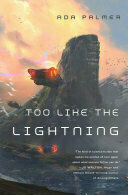
Finished reading: Too Like the Lightning by Ada Palmer 📚 and it is like nothing I have read before. I wish that was only because of the premise: that a 25th century character would write for a 26th century audience in the style of the 18th century — quite convenient when the author’s day job is being a historian of the Enlightment. Or just because of the gratuitous and at times bizzare sex, more than in anything I’ve read before — which, fine, nothing new under the Sun (king). But there is also, splattered across the pages, more gore, dismemberment and canibalism than I have ever — please, please, please excuse the pun — digested, and I am all for expanding boundaries but really, Dr. Palmer? The interest in censorship suddenly comes under a different light.
Still, it is an important story well told and I will grudgingly read the second book in the series.
📺 Silo, Season 1 is the first show I finished watching on AVP and all I could think about after the last episode was how very appropriate that Apple would be the one producing it — I’ll write no more lest I spoil it. Highly recommended, especially for fans of Fallout 3.

Finished reading: I and Thou by Martin Buber 📚 and there is a message there, hidden under miles-deep layers of impenetrable German that no translator can bypass. Whether it is any more complicated than “don’t treat people like things” — I couldn’t say.
To Buber’s credit, he himself said that the book was untranslatable. Without knowing what the original was like, I tend to agree.
I am attending a medical conference in Valencia, Spain this week — more thoughts on being back in Europe after 7 years coming up — and all I could think about while sitting in the auditorium, looking at slides and listening to the speakers was that these kinds of events would be the perfect use case for AVP.
The congress center in Valencia is top-notch, with comfortable seats and plenty of leg room. Even so, laptops are unwieldy, especially if you need to balance one while holding a coffee cup in one hand and a phone for taking photos of the slides in the other. This is even harder when you are crammed against the seat in front of you, which is the more common situation for large conferences. And if you use the laptop for anything other than touch typing — say, pulling up a paper that was just mentioned while it was still fresh in your memory — you will have to be focused on the screen and nine times out of ten an important slide will pass you by without your noticing or, even worse, noticing and pulling out the phone quickly only for the slide to change just as you were about to snap a photo.
So imagine if there was a device that could let you take photos, write notes, and do some web browsing all while still paying attention to what matters, the talk itself. If a friend and colleague was the one on the stage you could even take an immersive video. And before you say that the virtual keyboard is useless, Apple’s Magic Keyboard is lighter than an abstract book, more durable than a laptop if and when dropped, and works beautifully with AVP.
If I were one of 30,000 attendees in a large conference, say ASCO or ASH annual meetings, I wouldn’t even mind trying this out. Alas, this one is on the small side, with a few hundred people sharing the same room and hallways, and the embarrassment factor was just too much for me to pull it off. But I thought about it, and I’m hoping to try it out by the end of the year, shame be damned.