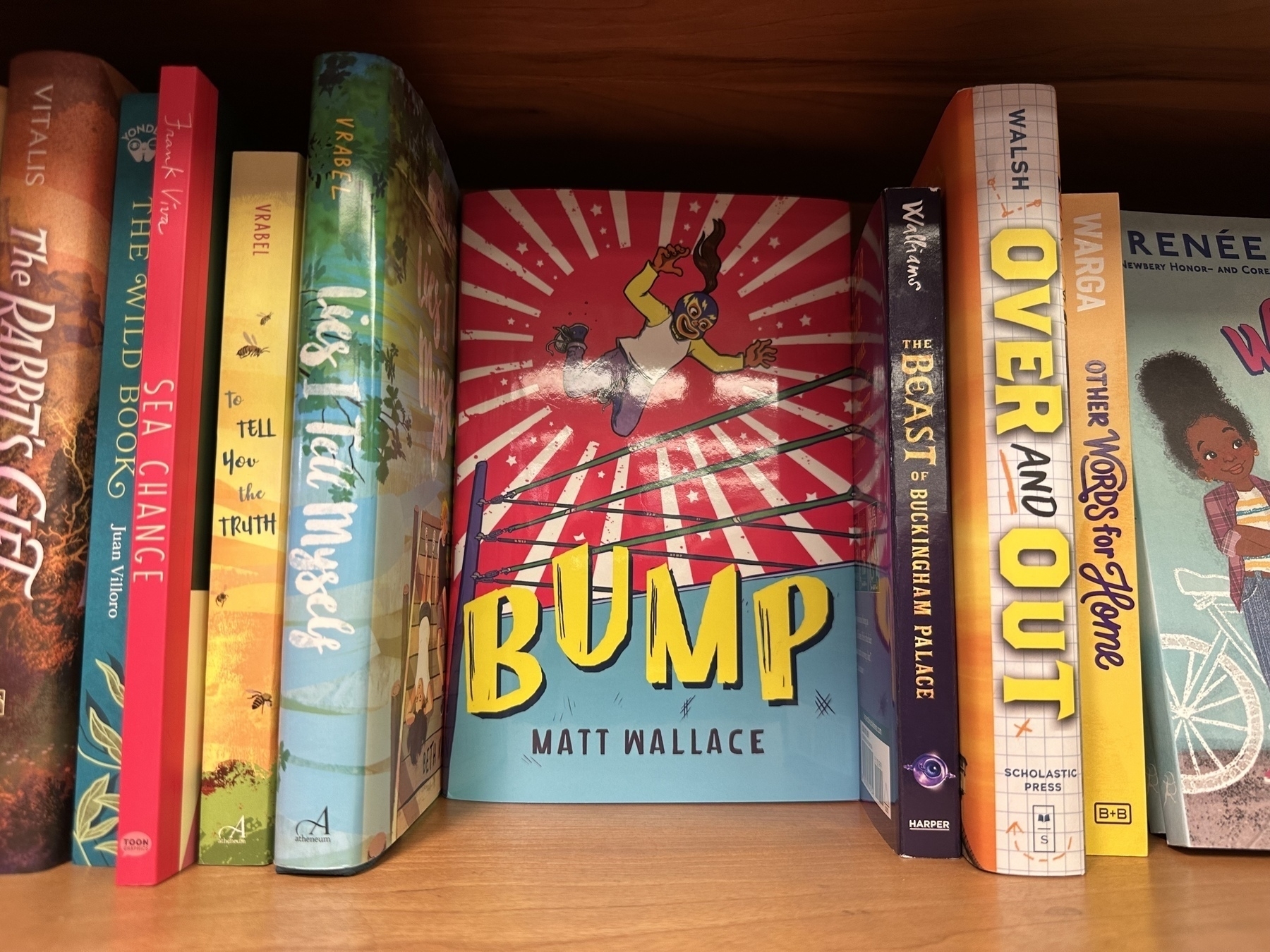
Always good to see a friend’s work out in the wild. This is Bump by Matt Wallace in the tweens section of Politics and Prose.
January 12, 2024
And so my trip to San Francisco ended with a 3-hour flight delay by United “for mechanical reasons” and a 3:30am touchdown at Dulles airport. At least it wasn’t a 737 MAX.
January 11, 2024
My last day in San Francisco. The city has the perfect combination of density and natural beauty. I’d say it’s underrated, but looking at property prices I’ll switch to “appropriately rated”. Will come back. And soon.
There is a big change in how Generation Z and whatever follows deals with technology, and of course it is parent-driven. Our eldest is a 6th-grader and we are among the youngest, if not the youngest, parents in her class.
We were both in our late 20s when she was born, which was considered geriatric in Serbia but is practically a teenage pregnancy for DC standards. While most of her classmates have smart phones, she is not getting one until she has a driver’s license — whenever that happens — and will have to live the hard-knock life of Apple Watch at school and the iPad at home.
To our older friends this is nearly child abuse. However will they develop socially, they ask, as if TikTok were a social network and grammatically incorrect emoji-laden texts the only means of communication. Won’t they miss out on important interactions… on their way from home to school and back, I guess? Friends our age and younger don’t yet have middle schoolers, but most agree with our stance. Dumb phones and/or smart watches are good enough for safety. Roblox et al on a tablet can replace the hour-long conversations over landline phones of generations past. So what need exactly does an iPhone fill, other than assuaging the fear of missing out?
Not everyone in a generation is the same, of course, but there are overall tones. In keeping with the economic hardship, stunted maturation, and the general pessimism of the millennials, I predict our tone to be “not so fast, young’uns”. By the time our youngest is in 6th grade, seven years from now, the smartphone tweens should be in the minority.
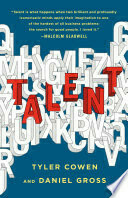
📚 Finished reading: Talent by Tyler Cowen, and I don’t yet have an answer to my question on its Straussian — Tylerspeak for hidden — meaning. The book is despicable in some places: are you sure you want to pick people committed to their families if that means they will choose to spend time with them over doing more work? — yes, this had struck a nerve — and admirable in others: how to help people who are far from the center of the action in their selected field to even imagine what they can achieve?
I would place it in the “narrow, temporary” quadrant of the breadth/timelessness 2-by-2. It is not for everyone, and it won’t last very long. To pick an example, Cowen and Gross suggest that employers should increase their profile — by blogging, writing books, doing podcasts, basically by doing what Tyler is doing — to increase their profile and the reach of their “soft” network and, ultimately, get more self-referrals from prospective talents who have heard about them. If everyone was to do this, would be it of net benefit to the whole system? I would argue not: the benefit would be to the most prolific and vocal talent-seekers at the expense of an immense amount of noise and all around confusion. And fifty years from now, will people have known about podcasts and blogs? Lindy says no. This doesn’t mean that the book is bad! It’s just not one of the “great” books.
Compare this to my gold standard of a broad/timeless — great — contemporary book: anything from Nassim Taleb’s Incerto, which is coincidentally what taught me about the Lindy effect. If everyone were to internalize its views and the dense network of mental models it brings to the extend they can, and act accordingly, the world would be a bit less of a madhouse. The concepts it talks about being about probability, it is also timeless.
So if your goal is to read only “great” books, well, first of all don’t read anything that came out in the last 5–10 years. But if you want to read “great” book candidates — which I am, let’s be clear, not trying to do this year but may try for 2025 — well, in that case, feel free to give Talent a pass.
Amusingly, one year ago to the day I wrote about On Bullshit, a broad, timeless, Great book if there ever was one.
In anticipation of the new edition of Poor Charlie’s Almanack arriving by mail — alas, the new delivery date is February 15 — I have been mulling over the more unusual mental models I’ve adopted since first reading about the latticework. The latticework is a mental model of its own — a meta-mental model, if you will — and you would do well to adopt some all of Mungers. The five I list here aren’t the models you will find in the Almanack, but I would not have identified them as such and remembered them were it not for Munger’s wisdom.
The links are to Wikipedia and journal articles, for now, but I hope to write a detailed account of my own for each, you know, once I get around to it.
Activation energy, especially as it relates to motivation and administrative inertia;
Epiphenomena as real and tangible things and not nuisances to be brushed aside, which I realized via both Hofstadter and Girard;
Phenotypic plasticity, which we take for granted at the level of an organism (in an environment of caloric abundance mammals will get fat) but not so much at higher and lower scales, i.e., cells and societies;
Carcinization, the nature’s attempt to evolve every crustacean into a crab five separate times, or, as I like to see it, nature’s way of telling us that hyper-optimization is seductive but ultimately a dead end — and again, mind the scale.
These five are interconnected in interesting ways, and if you arrange the arrows just right they do for a mini-lattice. Kudos to Munger for finding the right term. Munger discussed his own mental models in detail in the Almanack and they form a larger, but still loose, network.
The web of mental models is, of course, Nassim Taleb’s Incerto, built so densely and interconnected so profusely that Branko Milanović was right to laud is as a new type of writing. And in fact of the five models I listed, the first one — Waddington’s probability landscape — is a neat bridge between Taleb’s investigations and the other four. But that is a discussion for a future time.