It’s my first time in San Francisco today, and waiting at SFO’s designated spot for my Lyft ride I am stunned — stunned, I tell you — by how many BMWs, Lexuses and Teslas are used for ride sharing. An interesting data point.
In anticipation of the new edition of Poor Charlie’s Almanack arriving by mail — alas, the new delivery date is February 15 — I have been mulling over the more unusual mental models I’ve adopted since first reading about the latticework. The latticework is a mental model of its own — a meta-mental model, if you will — and you would do well to adopt some all of Mungers. The five I list here aren’t the models you will find in the Almanack, but I would not have identified them as such and remembered them were it not for Munger’s wisdom.
The links are to Wikipedia and journal articles, for now, but I hope to write a detailed account of my own for each, you know, once I get around to it.
Activation energy, especially as it relates to motivation and administrative inertia;
Epiphenomena as real and tangible things and not nuisances to be brushed aside, which I realized via both Hofstadter and Girard;
Phenotypic plasticity, which we take for granted at the level of an organism (in an environment of caloric abundance mammals will get fat) but not so much at higher and lower scales, i.e., cells and societies;
Carcinization, the nature’s attempt to evolve every crustacean into a crab five separate times, or, as I like to see it, nature’s way of telling us that hyper-optimization is seductive but ultimately a dead end — and again, mind the scale.
These five are interconnected in interesting ways, and if you arrange the arrows just right they do for a mini-lattice. Kudos to Munger for finding the right term. Munger discussed his own mental models in detail in the Almanack and they form a larger, but still loose, network.
The web of mental models is, of course, Nassim Taleb’s Incerto, built so densely and interconnected so profusely that Branko Milanović was right to laud is as a new type of writing. And in fact of the five models I listed, the first one — Waddington’s probability landscape — is a neat bridge between Taleb’s investigations and the other four. But that is a discussion for a future time.
January 6, 2024
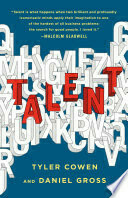
Currently reading: Talent by Tyler Cowen 📚 and so far the book is… reprehensible? If Cowen and his co-author Daniel Gross are serious about their recommendations on hiring then they are deserving of contempt — more on the specifics once I finish the book. But Cowen is a fan of Straussian readings; my Straussian reading of Talent is that people who take the book’s advice to heart without questioning its underlying premise are the contemptible ones.
Of course, that could be my own ego-defense mechanism talking. Surely I couldn’t have been reading and listening to Cowen for so long and not have realized that he was a sociopath.
The Washington Post reports another wave of covid is coming to America. Well, it certainly came to our household. And much like the first time around, I got it days after a vaccine — just my luck. At least this time it’s only 3 days of sore throat and runny nose, and not a full week of high fevers.
January 3, 2024
Calendar interoperability is underappreciated. I use iCloud for home, Google for the University and Office365 for work, all from a single app, which also handles invites and scheduling. Other people can see my various calendars in their own software, seamlessly. We should make everything a calendar.
Feature suggestion for a microblogging service: a “Do Not Post” button. Get all those poison darts and built-up steam out of your system together with the satisfaction of a button click, without the anxiety or guilt.
My list for the year, ordered by similarity. All are physical prints already on the bookshelf, just waiting to be snubbed for whatever else catches my attention.
The Books of Jacob by Olga Tokarczuk
In Other Rooms, Other Wonders by Daniyal Mueenuddin
At some level, the pure volume of writing—especially if you’re halfway decent at it—is perceived by some people as actual knowledge, even if you’re not saying anything at all, or even if you’re making ridiculous arguments riddled with fallacies.
Every once in a while, some 6,000 word word salad will land in my inbox from a figure like Freddie deBoer or Matty Yglesias or Richard Hanania—and I stay subscribed, just so I know what’s going on (maybe I shouldn’t)—and I think, “Lord, have mercy. Who has time to respond to all of these things? Or who would actually want to make themselves that miserable? I sure don’t!” And then I get back to work.
Feeling the same, I unsubscribed from most newsletters long ago.
January 1, 2024
Writing and editing are distinct skills. As I gaze into a stream of text that someone else wrote and several more people edited, as I try to make sense of the reds and the greens and the teals of Word’s tracked changes stacked on top of the red squiggles and the double underlines, as the nested comments flow one after another until my (aging!?) M1 MacBook Air begins to stutter, I realize that, at heart, I am a writer.