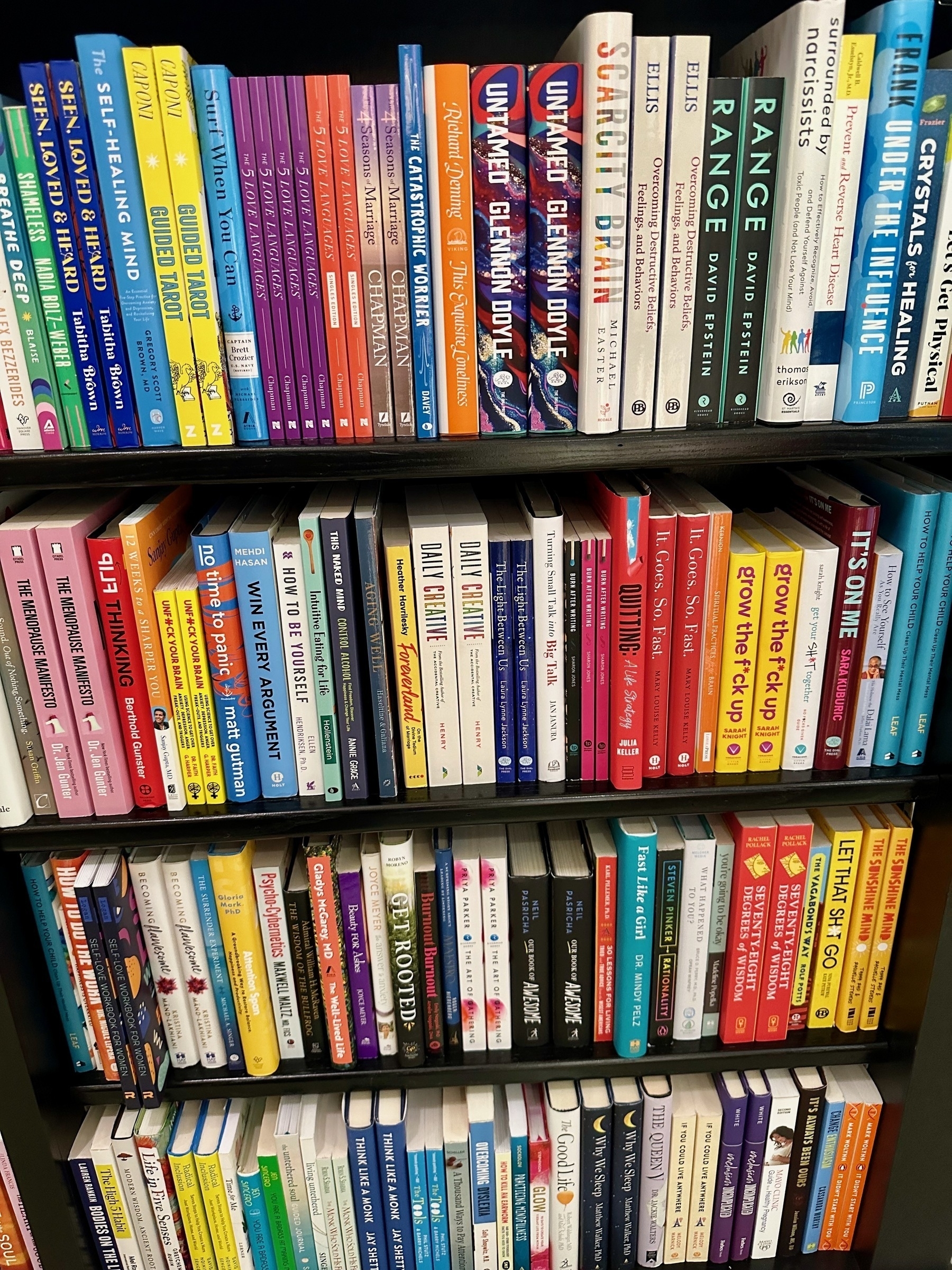
Adam Mastroianni had another interview with Russ Roberts, and this one didn’t sit with me as well as his previous appearance. They talked about things we learn in school — higher education, for the most part — and what the point of it all was when most of what we cram in is forgotten.
They gave several examples of this, all of which I have quickly forgotten (ha!), but listing things we were made to learn in medical school never to use again was a popular past time on #medtwitter so I will list a few topics that come to mind first:
Bernoulli’s equation
the Krebs cycle
names of all 12 branches of the maxillary artery
formula for the independent two-sample t-test
recommended step height and depth for elementary school stairwells
Though that last one was clearly a relic of Serbia’s socialist past, the first four weren’t, and are still being taught in pre-med courses and medical schools around the world. If the goal was to have every doctor know all of these throughout their careers, well, mission failed. But why would we even want that to happen?
Well, I have come around a bit since that 6-year-old tweet and came to appreciate the exposure to different concepts as the scaffolding to whatever career we end up in. No one cries out, after a skyscraper is complete, about all the money and time wasted putting up a scaffolding, setting up cranes, temporary elevators, and such. It is not a perfect analogy since most people in higher education don’t have a blueprint — not even medical students since a doctors' job can be anything from an artist (plastic surgery) to woodworking (orthopedics) to glorified administrative asssistant (general practitioners in most countries) — so it is like building a scaffolding to nowhere, parts of which ossify into the building proper, parts of which decay with time, and parts of which you dismantle as soon as it seems safe to do so, since you hate them from the bottom of your being.
“Why ever did I bother learning about the Krebs cycle five different times!?”
Twice in high school — biology and chemistry separately, and three times in medical school — chemistry proper, biochemistry, and physiology. I cry out now, as a hematologist/oncologist without a regular practice; but things could have taken a turn towards a career in organic chemistry, or genetics, or one of those specialties where the cycle is more relevant (though really oncology may very well be one of them!)
The poor Krebs cycle is notorious because it is repeated so often without practical use for most of medicine, but there are many more such concepts throughout life that went in one ear and out the other (Are viruses causing hemorrhagic fevers made of DNA or RNA? Well, I knew it for my USMLE Step 1 exam!)
RNA, says Wikipedia.
The scaffolding analogy puts a slightly different spin on grades as well, which could be a rather useful signal of where your construction should go and what kind of a building you want to make, and not your worth as a human being that most teachers and some students want it to be. But let’s not bring up grades again.
So I was surprised by Mastroianni’s and Roberts' surprise about us forgetting — because of course we do! And if the intent of the teachers was to instill knowledge that will last forever and ever, well, most of it is a miserable failure, except for that one sliver of insight that each of us carry for life. But the slivers are different for each of us, and to appreciate your unique sliver you may still need background knowledge that you will eventually forget — the more specialized the area, the more background knowledge needed, so good luck trying to untangle that web.
The proportion of genetics papers with autocorrect errors was estimated in 2020 to have reached 30 per cent. The Human Gene Name Consortium decided to rename the genes in question, wisely accepting that this would be easier than weaning researchers away from Excel.
At the intersection of science and technology lies the festering boil that is Microsoft Office.
Nassim Taleb in Antifragile:
The link points to an excerpt posted on the Farnam Street blog, which I stopped following years ago — too much noise in the form of wisdom nuggets — but still has its uses. You should really read the whole of Incerto
The more frequently you look at data, the more noise you are disproportionally likely to get (rather than the valuable part called the signal); hence the higher the noise to signal ratio. And there is a confusion, that is not psychological at all, but inherent in the data itself.
…
Now let’s add the psychological to this: we are not made to understand the point, so we overreact emotionally to noise. The best solution is to only look at very large changes in data or conditions, never small ones.
If you’re reading the news several times a day, you’re not being informed, you’re being stimulated. Try giving yourself a break from it. Look at this stuff at wider intervals, and in between sessions, give yourself time to think and assess.
Always good to see convergence on important topics. I now get most of my news from books.
After the deadly explosion at the al-Ahli Arab Hospital, Hamas issued a statement through its Health Ministry claiming as many as 500 or more deaths as a result of an Israeli airstrike. Instead of reporting what was known – an explosion with casualties – while working to confirm details about the scale of the blast, the number of deaths and the source of the explosion, each of the major newswires simply rushed to repeat each of the claims of Hamas verbatim. The Associated Press did it. So did Reuters. So did AFP. The west’s largest English-language news organizations followed suit. The Washington Post did it. So did CNN. So did the Wall Street Journal.
None of it was a huge surprise — things haven’t changed much since the 1999 NATO bombing of Serbia, when I witnessed in real time how pure speculation from a local TV network that was literally accross the street became Sky News scrolling text within the hour — but still disheartening to see after so much ink has been spilled about fake news and sundry.
Even more disheartening: when the stakes are high and facts are uncertain, journalists error on the side of blurting out whatever will get the highest emotional reaction — for the sake of a click. When stakes are low and there is plenty of time for research — they do the same!
So with useful daily news (which is to say, local) becoming extinct, and good weekly/monthly journal articles becoming ever more rare, at least the amount of cognitive noise in our lives should decrease! If only we weren’t such suckers for noise-generating machines (which is to say, most social networks).
My preferred m.o. on this blog is to write half-baked posts and never look back, but I left out an important piece out of yesterday’s comment on The Techno-Optimist Manifesto so there is now an update, along with a few corrections to spelling and style.
Marc Andreessen, the billionaire venture capitalist, co-founder of Netscape, and occasional podcaster and blogger, wrote a bizarre post today titled The Techno-Optimist Manifesto, in which he first builds a straw man argument of the present-day’s luddite atmosphere using his best angsty adolescent voice (“We are being lied to… We are told to be angry, bitter, and resentful about technology… We are told to be miserable about the future…” all as separate paragraphs; you get the idea), then presents a series of increasingly ludicrous statements about our bright technological future that at the same time glorify the past, creating a Golden Age fallacy Möbius strip.
This is not Andreessen’s first act of incoherence: read or listen to last year’s Conversation with Tyler (Cowen) and his answer to Tyler’s question about the concrete advantages of Web 3.0 for podcasts (spoiler: he couldn’t name any). But that was an impromptu — if easily anticipated — question. Today’s Manifesto should be more baked, one would hope. But one would then be disappointed, as the entire article reads more like a cry for help than a well-reasoned essay. Here are some of the more flagrantly foul bullet points, with my comments below.
We believe that since human wants and needs are infinite, economic demand is infinite, and job growth can continue forever.
This is particularly salient for me after reading Burgis and Girard, and in short: no. Just no. Human desires are infinite, but not all desires are created equal. If your goal is to fulfill every human desire, you are not going to Hell with good intentions — you are intent on going to Hell.
We believe Artificial Intelligence can save lives – if we let it. Medicine, among many other fields, is in the stone age compared to what we can achieve with joined human and machine intelligence working on new cures. There are scores of common causes of death that can be fixed with AI, from car crashes to pandemics to wartime friendly fire.
We believe any deceleration of AI will cost lives. Deaths that were preventable by the AI that was prevented from existing is a form of murder.
A particularly pernicious pair of paragraphs that talks about AI as if it is currently able to save lives (it isn’t), and about people urging caution as if they are murderers (they aren’t). Doctors and biomedical researchers will be the first to welcome AI wholeheartedly into their professions, but that is mostly because too much of their professional time is spent fighting the bullshit that their technocratic overlords — say, IT companies funded by billionaire investors — have wrought upon them.
We believe that we are, have been, and will always be the masters of technology, not mastered by technology. Victim mentality is a curse in every domain of life, including in our relationship with technology – both unnecessary and self-defeating. We are not victims, we are conquerors (emphasis his).
The dichotomy is not master/victim, it is master/slave, and the only reason Andreessen would think that 21st century humans are not slaves to technology is that he doesn’t get around much. We can agree that humans are not victims, but then again, no one is arguing that humans are committing crimes against technology.
We believe in nature, but we also believe in overcoming nature. We are not primitives, cowering in fear of the lightning bolt. We are the apex predator; the lightning works for us.
And yet we don’t go around randomly setting stuff on fire. The tribes whose members did that either got rid of those members or else got extinguished.
We believe in risk, in leaps into the unknown.
Good for you. I believe in managing risk and exploring the unknown before leaping into it.
We believe in radical competence.
All I see is radical stupidity. See: you can put “radical” in front of anything and it makes you seem profound!
We believe technology is liberatory. Liberatory of human potential. Liberatory of the human soul, the human spirit. Expanding what it can mean to be free, to be fulfilled, to be alive.
It is! I was at an airport a few days ago and saw several double below-the-knee amputees who a few decades ago would have had a miserable time but can now walk around like nobody’s business. However, technology making up the difference to something that was there before is one thing — creating something completely new is a different beast altogether. The probability space is vast and full of landmines, and a Manifesto which praises leaps into the unknown without mentioning a single externality is foolish at best, dangerous at worst.
↬Baldur Bjarnason, who likened the philosophy espoused to fascism. It made me think of Nationalism of the Serbian kind, and a saying from a (far from perfect) Serbian politician that, whenever he heard the word “patriotism”, he’d start looking for his wallet. Well, “technology” is the patriotism of Silicon Valley bros, and we’d better start paying attention to our wallets.
Update: Typos fixed and style cleared up. I also forgot to note one of Andreessen’s more henious acts: naming the dead as Patron Saints of his disastrous cause. I am sure Nietzsche wouldn’t have minded — nihilism masquerading as materialism is right up his alley — but I am not sure how Feynman and Von Neumann would have felt, the former explicitly rejecting to work on the hydrogen bomb. Edward Teller would have been a much better ideological fit — nuking Alaska seems to be right up the Techno-Optimists' alley — but then again I doubt they are self-aware enough to have the person who was the likely inspiration for Dr. Strangelove as the face of their party.
Four years and a few months after our trip to Maui, a conference brought us back to Hawaii. It was an exclamation point that capped a year fullofbeachtravel. But this was emphatically not a beach vacation.
My biggest fear was getting there and back. I’ve had bad luck with air travel recently and was fully ready for us to get stuck on a layover or loose baggage. It ended up being the smoothest ride both ways, and all four flights were early to their destination. Delta from National via JFK and United to Dulles via LAX, in case you were wondering.
My first impression of Honolulu was paved paradise. It required much skill to turn tropical heaven into a commuter nightmare, but there is nothing the Americans can’t do. Then I remembered that it is first and foremost a military base, so of course there would be “interstate” highways — marked H — for all those defense needs, and more roads led to more cars which in turn led to most of downtown Honolulu being congested.
But the weather and the beaches and the food are all so nice that tourists won’t mind crossing 8 lanes of traffic to reach their destination, or get a good shot of that mural. Resilience!
Statue of Father Damien in front of the Hawai'i State Capitol, Honolulu.
Then there is the brutalist bug, which has spread to Hawaii’s State Capitol and which, surprisingly, I didn’t mind as much as e.g. Boston City Hall or L’Enfant Plaza. The brilliant statue of Father Damien — Saint Damien of Molokai — helped, and I was sad to see that the artist who made it, Marisol Escobar, “became world-famous in the mid-1960s, but lapsed into relative obscurity within a decade.” so the statue, made in 1969, was close to the end of her brief career.
But concrete caskets are not the ugliest thing humanity visited upon the island. There is also glass and steel, because nothing makes more sense to build on a tropical paradise than a greenhouse.
Of course, it is not all gloomy — far from it. The more ground-level the building was, the nicer it was to be around (funny how that works), and even in the nooks and crannies between the brutalist behemoths you could find livable spaces. They also tended to serve great food!
Wasabi Bistro, Waikiki, HI.
Which is a segue into all the marvelous food we had on Oahu, and usually in unassuming places: from Korean BBQ at a shopping center food court, to Waiola shave ice in a bit of an urban desert, to shrimp at a North Shore food truck. Admittedly, it was nothing you could not also get in DC: four twice the price and with half the quality. Also, as good as shave ice was, bao bing was better.
Ube and taro have been a family favorite ever since a visit to Mt. Pleasant’s Purple Patch soon after we moved to DC, so we were happy to see it used everywhere, including an ube-flavored Melona you could get at a gas station. So clearly we went twice to a restaurant that served both pancakes and waffles made with ube, and of course the next step is to start making them at home.
This is all good food, but for the food/atmosphere combination Wasabi bistro was best by far, and I am a bit worried for our waistlines and wallets both if and when we go to Japan.
Mana Kai catamaran just before leaving for Turtle Canyon, Waikiki, HI.
I am burying the lede here, which is that the water and the beaches of Oahu are absolutely fantastic, and though busier than Maui’s they are busy for a reason, which is to say better in every way (sorry, Maui). An East Coast beach vacation requires chairs, food, toys, and other implements to keep you busy because let’s be honest, you don’t want to spend too much time in the cold, turbulent waters, and if you aren’t anxious about rip currents because you don’t plan on swimming, there are all those sand holes to keep your thoughts occupied with death and gloom. And no, it’s not all that bad — we keep coming back, after all — but it can’t hold a candle to Waikiki, where you don’t even need a beach towel because the weather is so nice that air drying is actually pleasant even after a sunset swim.
But wait, there is more: for the price of a mediocre dinner you can get on a catamaran and go snorkeling with turtles, among other things, which isn’t quite like paying next-to-nothing to a Thai fisherman to take you to a coral reef, but then again Koh Samui doesn’t have a Costco (let alone two that are on Oahu). Some of the lifeguards on our boat looked like they were no older than 16 and what a life that must be, though of course I imagine you have to leave Hawaii for higher education at some point, unless you plan on becoming a marine biologist.
To see Honolulu from up high — and you should! — the first place that will come to mind is the Diamond Head crater which is easily visible from any Honolulu beach and easy to climb and of course you should go not just for the views but also to check out a pre-WW1 bunker that is nestled on the top and is now the foundation of the observation deck. But there is also the National Memorial Cemetery of the Pacific, which in addition to the views will also teach you a few things about the naval battles of WW2 and beyond — or rather what the US military would like you to know about them. Educational either way!
Not every activity was good: the Dole plantation was a bit of a tourist trap. I imagine the target audience is a busload of people taking a day trip from their cruise. Also, everything in that store and the ubiquitous ABC stores is grossly overpriced. Good thing there is a Costco.
That last point is also why Honolulu may be on our list of places where we could maybe work for a year or two — apparently they have a cancer center — but not live long-term. While restaurant prices are on par with DC — at much higher quality! — groceries were much more expensive, and I can only imagine what the real estate market looks like. There is also the Groundhog Day effect that a friend who lives in Honolulu remarked upon: when every day is perfect and the weather never changes, days tend to run into each other. Also: the island is small enough for things to get claustrophobic rather quickly.
But it is a great place to visit, which, duh, of course it is, but it is also nice to have confirmation from time to time that not everything we have been told and shown on TV was a lie.
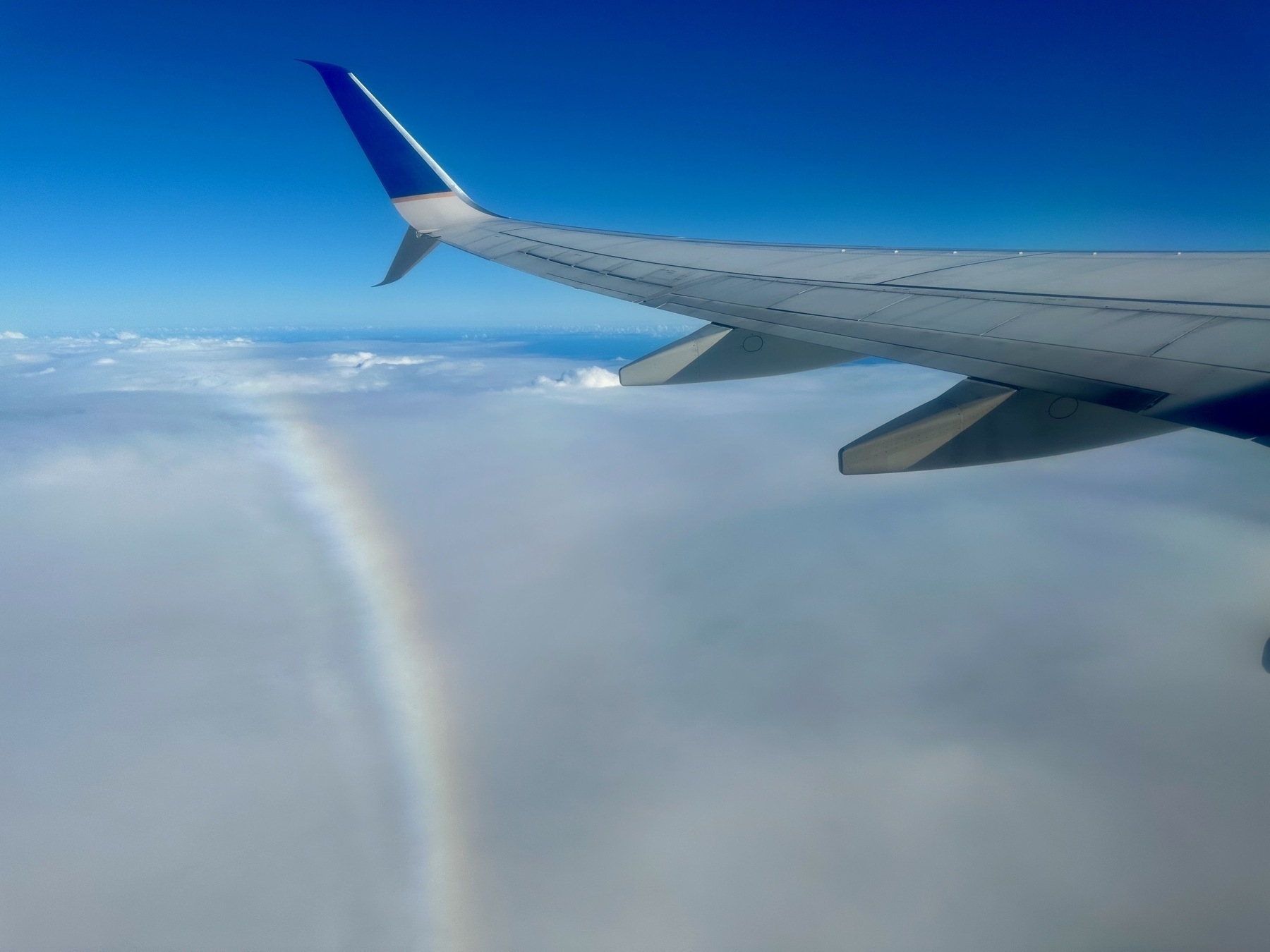
A rainbow to great us shortly after departure from Oahu, and how much more ridiculously cute can it get?

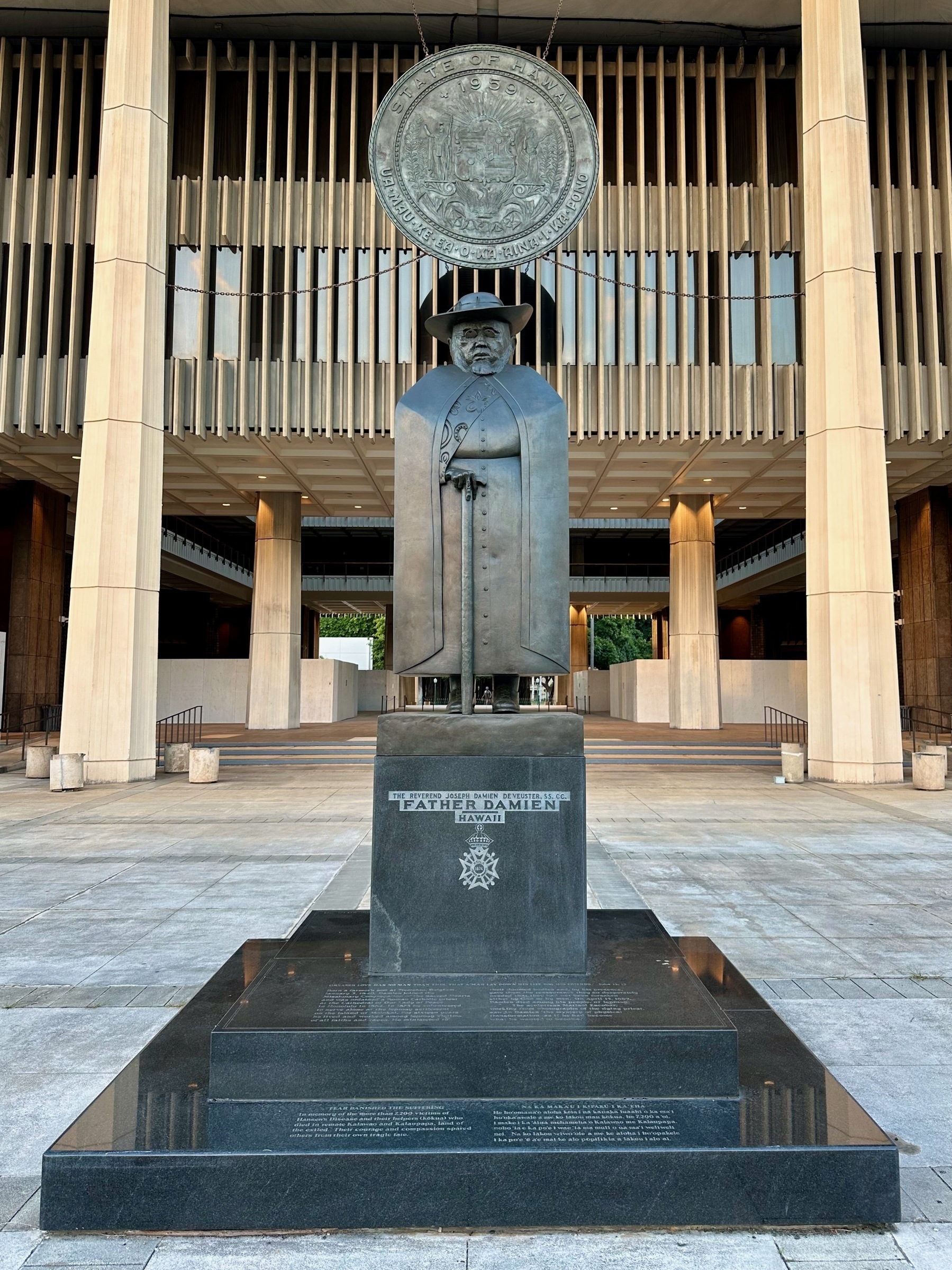 Statue of Father Damien in front of the Hawai'i State Capitol, Honolulu.
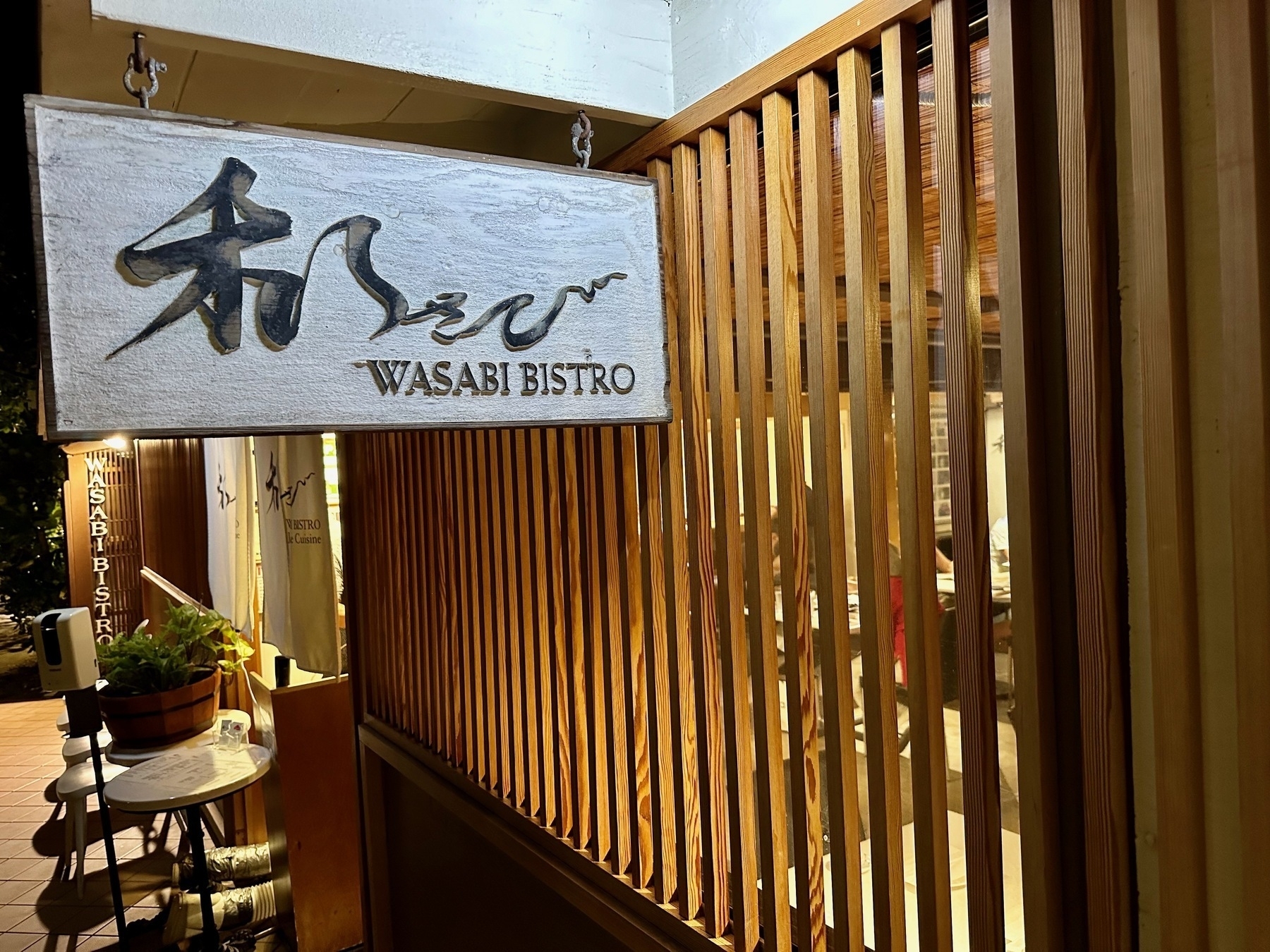 Wasabi Bistro, Waikiki, HI.
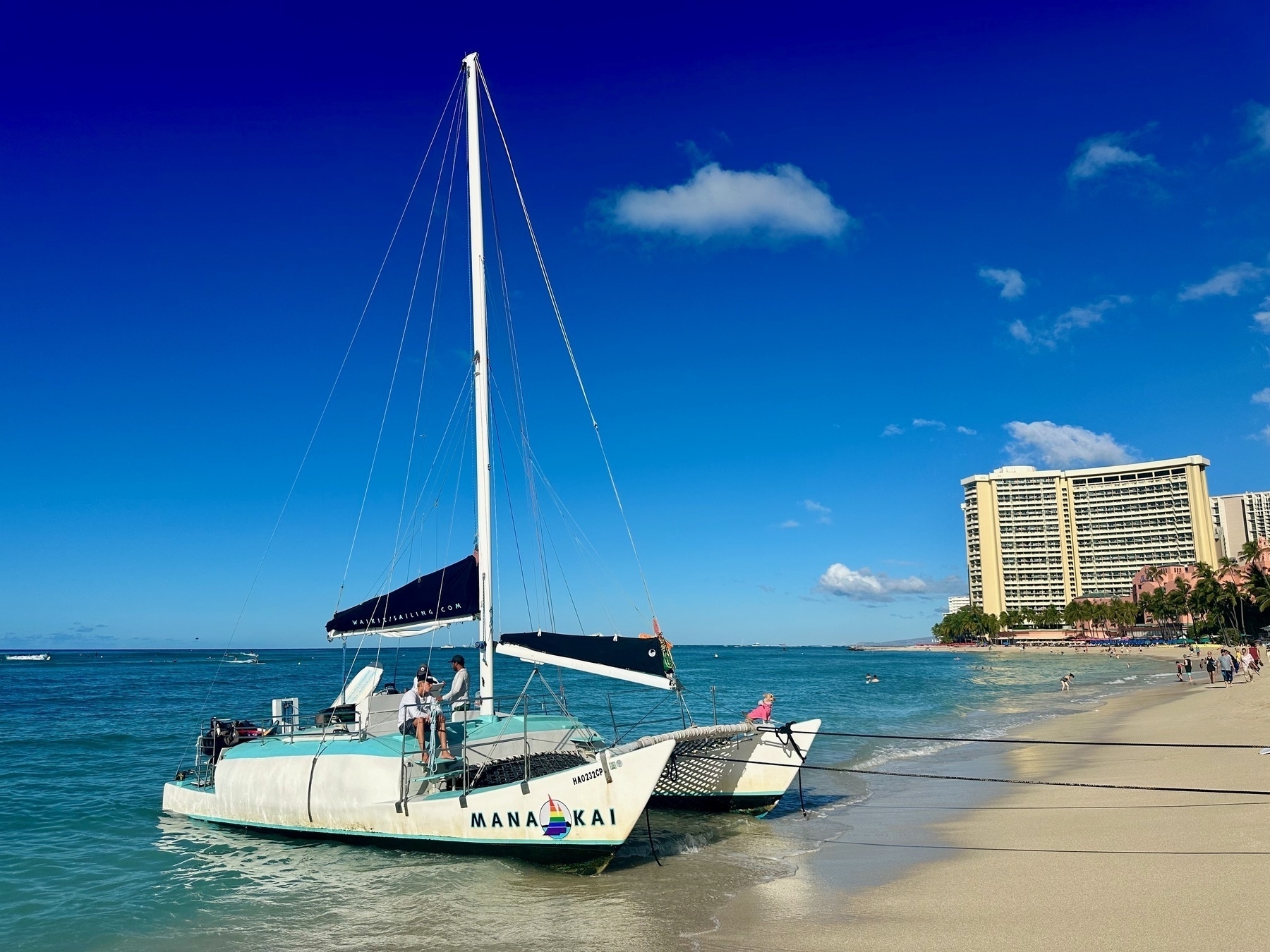 Mana Kai catamaran just before leaving for Turtle Canyon, Waikiki, HI.