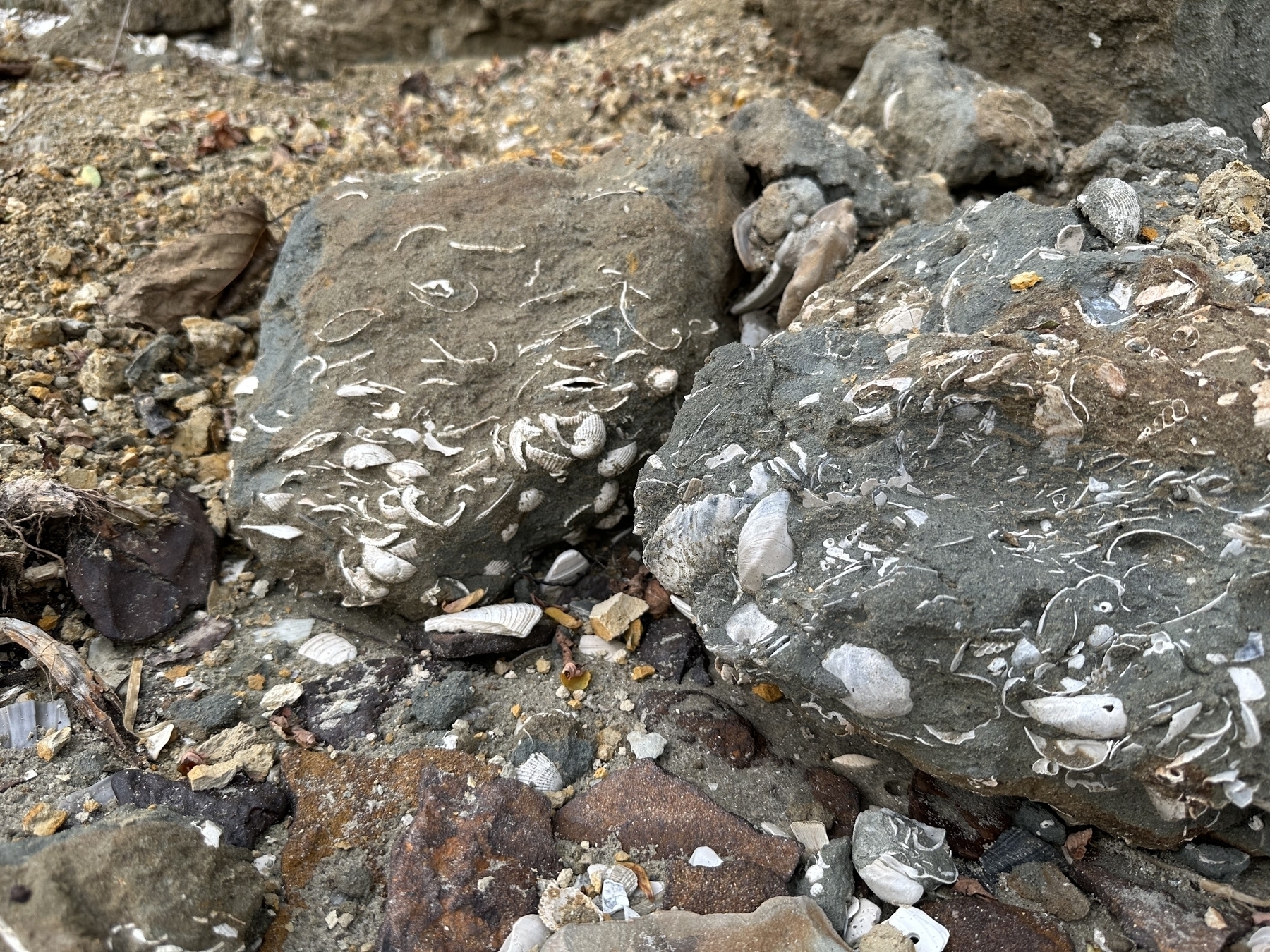
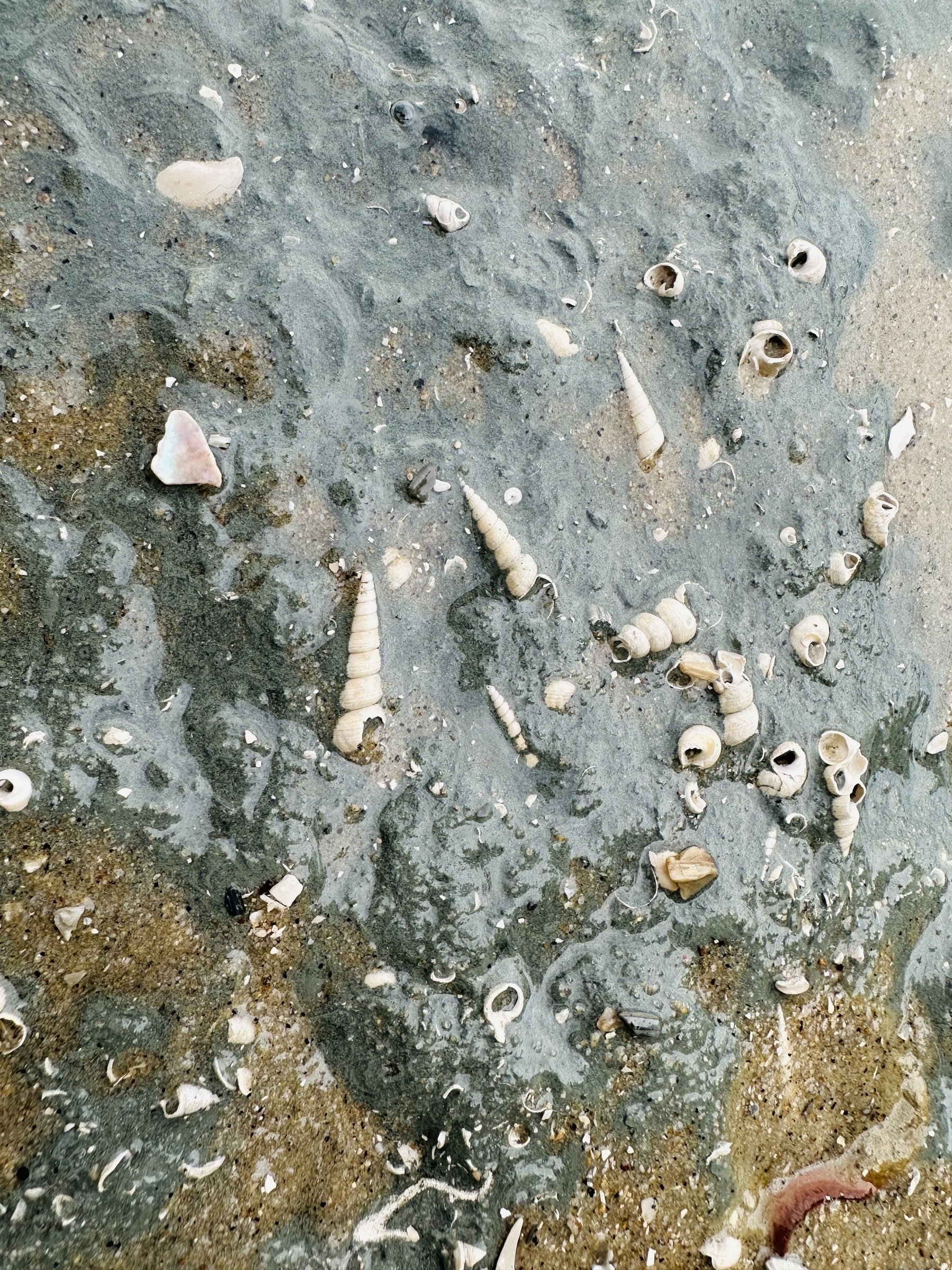
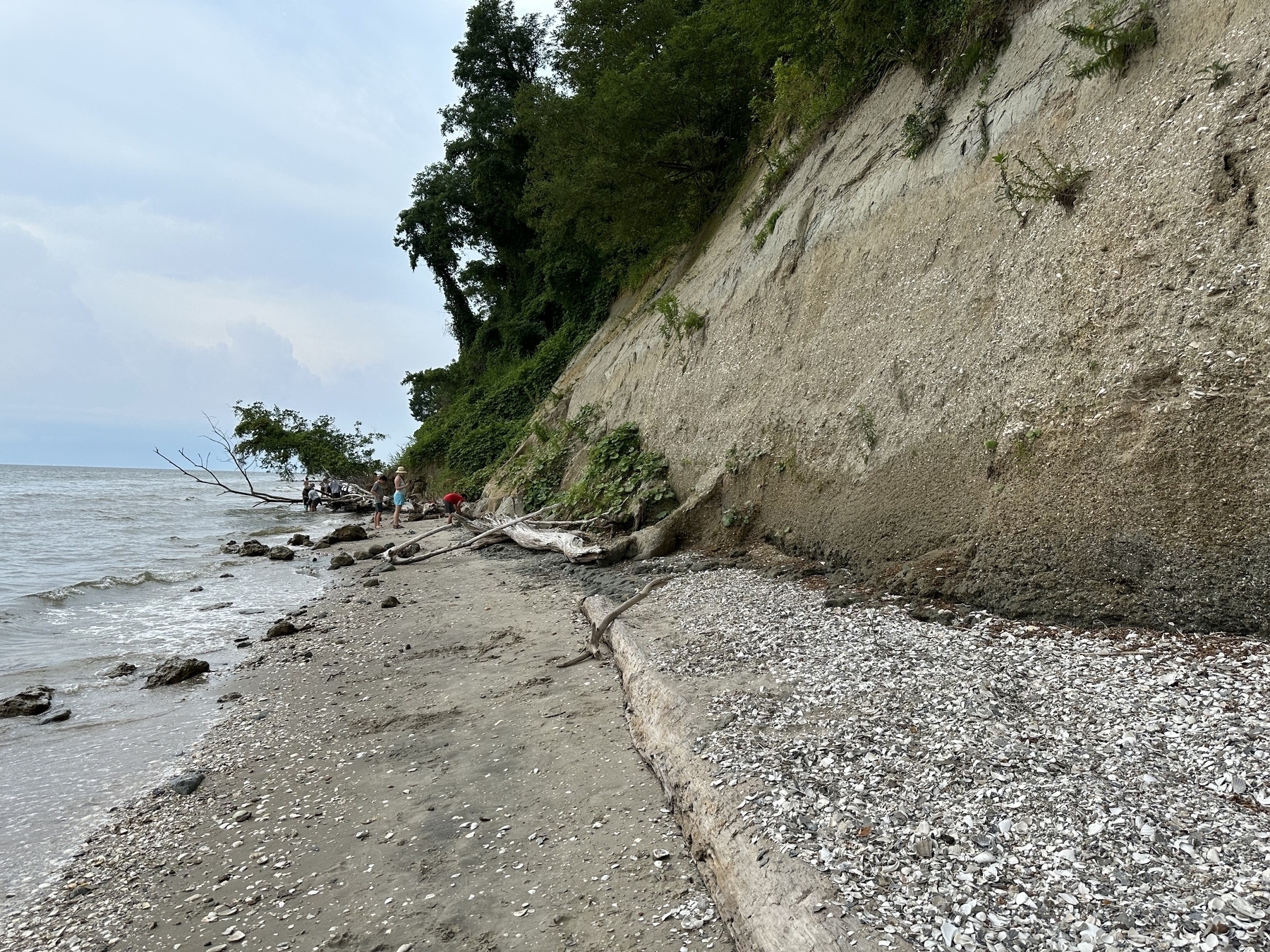
We came to Calvert Cliffs for the fossils, and the cliffs delivered!
Writes The Washington Post:
Council member Brianne K. Nadeau (D-Ward 1) echoed Mendelson’s remarks. Bowser, she suggested, “can ask [D.C. police] why they’re not patrolling equitably across the city, or provide data on what they’re doing, or [ask] why the U.S. attorney is declining two-thirds of the cases. I want to reiterate: This council is united in addressing public safety issues and we’ll continue to do it.”
This is in regards to a new emergency public safety bill passed by the council in response to a spike in violent crimes, and if you took Nadeau’s comments to heart you would think that the problem was restricted to certain neighborhoods — you know which ones they are — and was a direct result of there being less police presence than in some other areas — you know which ones those are as well.
Throwing out words like diversity and equity has become a verbal tick for some, but if council member Nadeau said that the D.C. police were not patrolling equitably with intent, we are deeply in newspeak Ministry-of-truth territory. Because the police are, in fact, patrolling equitably: in the wrong direction. Bad decisions have consequences D.C. council cut the police budget by $15 million in June 2020; by April 2023, police staffing reached a 50-year low which came both from the cuts directly, and indirectly from the burnout of those who remained. and instead of owning up to their mistakes — the equitable policing the Council achieved meant that previously safe parts of town are now also unsafe — they double down on their bad reasoning.
But to justify the title of the post: equitable — unlike, let’s say, gaslighting is a precise word, which in my book makes it a good word. But that doesn’t necessarily mean that achieving equity is always good. “Socialism makes everybody equal: equally poor”, went the old joke, and what goes for equality can also go for equity, as D.C. Council has just shown.
The two most recent episodes of EconTalk, equally engrossing, could not have been more different:
But it is only Rebanks’ I would listen to again, and his book is now on my to-read list.
Visiting Montauk beach at Calvert Cliffs, a family member had one mission: to find a shark tooth. Millions of years ago, this part of Chesapeake was warmer and mostly under water. Many a shark dropped a tooth or a hundred during that time; today, they tend to drift to the shore with some regularity.
Searching for a speck of black in a tapestry of white-gray brought to mind Annie Dillard’s Pilgrim at Tinker Creek, more specifically the chapter about learning to see, and yet even more specifically, her discovering praying mantis egg cases This is a longer blog post from The Examined Life about writers and insects; scroll down for the Pilgrim… excerpt. everywhere she looked, once she learned what one looks like.
My own learning-to-see training started with watching birds — not organized or consistent enough to be called birdwatching — and realizing in short order that not every brown-gray bird smaller than a robin is a sparrow, that blue jays, cardinals, and woodpeckers are actually quite abundant even in urban areas, and that those blue jays, as magnificent as they are, usually sound like nails on a chalkboard. The beach makes for even better training grounds. For novices like us there are mermaid’s purses and loggerhead turtle tracks — we saw both during our Outer Banks excursion — things alien enough to immediately be recognized as something. The mental exercise consists of discovering what that something is.
Not so with shark teeth, especially not with the small ones you are more likely to come across during a daytime summer stroll, as opposed to a planned break-of-dawn winter expedition. Is it a spiky piece of iron ore? A fossilized crab claw? Tooth of a mammal? Who knows!? Short of finding a 6-inch dental behemoth, casual beachgoers like us will come up with a million reasons why this black triangle isn’t an actual tooth, and why this other may be, without ever knowing if they are correct. Annie Dillard could put that insect egg casing in a jar and see dozens of tiny praying mantisses scuttle out and devour each other. I can put my black triangle in a dish and look at it until the Sun implodes, and it will continue being that same black triangle, possibly melted.
Unless, of course, we find an expert to tell us why these ridges here mean that it comes from a shark’s jaw, or why this dent over there means it is actually part of a crab. And, knowing that, we will know with certainty — conditional on us trusting the expert — what those two particular artifacts are, but could hardly extrapolate to other pieces of black material found on the beach, and most certainly not to those nestled on the forest floor, or buried in the desert sands, or hiding under the carpet of a 3-story walk-up.
This is in fact very much how medicine works: sometimes, the symptoms are clear enough and occur often enough that you may know as well as an MD that there is a urinary tract infection brewing. But too often — most of the time, in fact — the problems are subtle and chronic and may not develop into something recognizable until it is too late — in which case you better find an expert — or, maybe, never amount to much of anything — in which case you need that expert even more, the most valuable part of medical expertise consisting of the knowledge and experience needed to muster the confidence to say that something is just a piece of rock.
Update: Two months later, we went back and found some.
Having deleted my Facebook account nearly a decade ago, and last having logged in to Instagram back in 2012, I had no expectations of Threads. With quick onboarding and a pleasant enough first impression, those expectations were exceeded.
I won’t be coming back, but if they enable ActivityPub and make the “official” accounts — medical societies and NBA teams for me, please — accessible from micro.blog, it will be a win for everyone.
Well, almost everyone.
We came to Calvert Cliffs for the fossils, and the cliffs delivered!
Once hailed for decriminalizing drugs, Portugal is now having doubts:
In the tourist quarter in the shadow of Porto’s fortresslike cathedral, a social worker with a government-funded nonprofit, SAOM, handed out clean syringe packages to people who use heroin. When crack pipes are available, the social workers give them out. There’s no judgment, few questions, and no pressure to embrace change.
Summing up the philosophy, Luísa Neves, SAOM’s president, said: “You have to respect the user. If they want to use, it is their right.”
Absolutely bonkers. Not putting people in jail for drug abuse is one thing, condoning it is madness. Do they also hand out flasks of whiskey to drunks?
D.C. Revamps Driver’s License Design:
“USA” was added directly next to Washington, DC on the top left, making sure that TSA agents, bouncers, and other security gatekeepers know the District is indeed part of the United States. The cards once read “District of Columbia,” which confused some.
Only in America.
🏀 USA Basketball starts fresh with new players and coach for FIBA World Cup:
USA Basketball has won gold at the past four Olympics but is seeking to avenge an embarrassing seventh-place finish at the 2019 FIBA World Cup in China, where an underwhelming roster lost to Serbia and France.
No shame in losing to the homes of Nikola Jokić and Victor Wembanyama, even though the first didn’t play and the second was still in diapers back then.
Magic, Mundanity and Deep Protocolization:
Nudge technology as conceived by behavioral economists turned out to be irreproducible nonsense, but nudge technology as embodied by AI will be real, and beyond anything Sunstein and Thaler dreamed of.
I haven’t appreciated Venkatesh Rao recently, but this is a good article! Bonus points for teaching me about the Balenciaga meme.
Cool resource alert: Improving Your Statistical Inferences by Daniël Lakens has the best introduction to p values I’ve seen on the free web. Frank Harrel’s Biostatistics for Biomedical Research has been available for a while, but only suitable for advanced readers.