July 20, 2023
A new guilty pleasure in our household — and I mean really guilty, as in I could find ten thousand reasons why it’s bad yet still I watch — is Guy’s Grocery Games. All that is good and bad about American TV, packed into 30 minutes. 📺
Two excellent back-to-back episodes of the Joy of Why podcast, both featuring waves: jellyfish and fluid dynamics, and the arrhythmic heart. The conversations were basic enough that even this non-physicist non-mathematician could understand, though I did have a leg up on the heart episode.
Chris Arnade walking across Japan, part 2:
So the technocrat/policy types look at Japan’s last few decades of relative economic stagnation as a failure, while the Japanese just shrug it off and chalk it up to one of the costs of maintaining their cultural identity.
Haven’t thought about it that way before, but isn’t another country set on preserving its identity also in a period of economic stagnation? Craig Mod noted how and why they are not the same, however, and I like Japan’s prospects better.
Yesterday’s EconTalk was with Lydia Dugdale on the Lost Art of Dying, which is the title of Dr. Dugdale’s book but also a translation of Ars moriendi, a 15th century Latin text about the good death. The episode is in this year’s Top 5, and I wish I could dwell into this. Ars longa…, as they say.
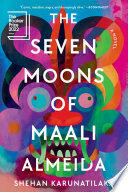
Finished reading: The Seven Moons of Maali Almeida by Shehan Karunatilaka 📚
My wife was first to notice it was was not the type of book I usually read — which is to say fairly obscure 50-year-old works of non-fiction. This one is a brand novel that won the Booker prize last year, and I am not at all embarrassed to say that is was the prize that led me to it — M John Harrison of Light, and several other of my favorites being on the jury and deeming The Seven Moons… a worthy contender.
And you know what, it is! I absolutely see why Harrison, he of baroque prose and unintelligible place names on planets far, far away, chose the book, some parts of which are as inscrutable as the denser sections of Viriconium. Only, it’s not a fantasy world on another planet, it is 1980s Sri Lanka, and the things people do to each other are more horrifying than anything Harrison could have come up with for the mere fact of things like that actually having occurred, and the world not caring much, back then or now.
Ultimately, Karunatilaka pulled two great tricks, one tactical the other strategic. The tactical one was to write a novel in second-person singular that actually works. The strategic was to persuade the world that a fantasy murder mystery featuring ghosts, demons, ghouls, and a host of other supernatural and real-world monsters was not yet another piece of genre fiction. Feats worthy of a Booker prize, indeed.
Stop the presses: I have just found out that Derek Lowe’s Science column In the Pipeline has an RSS feed. Years ago, I tried adding it to my then-feedreader of choice, but either I was not persistent enough in my search, or it just wasn’t there back then. Either way, I’m happy.
I would have found this stalking sales playbook utterly unbelievable if I weren’t on the receiving end of several campaigns. SpamSieve and silencing unknown callers are my friends.
Milan Kundera’s Last Joke:
The idea that the act of forgetting binds together both perpetrators and victims in the common pursuit of survival is at once deeply humanistic and at the same time deeply unsatisfying to moralists who prefer heroes who win out and villains who receive a timely come-uppance. But such endings made little sense to people in places such as Czechoslovakia, for whom learning to live with injustice and defeat was a geographical requirement.
And to the list he goes…