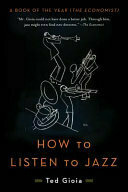
Finished reading: How to Listen to Jazz by Ted Gioia 📚
“Finished” as in read every word on the page, yes. But to actually finish this one will take a few years’ worth of listening, as you can imagine. At least I won’t be listening blindly.
With Tweetbot and Twitterrific gone, and both the website and official app insistant on algorithmic timeline as the default, it is time to say goodbye.
Well, almost. For the few accounts that haven’t yet migrated and still have interesting things to say, there is NetNewsWire.
Unmodified ChatGPT output, if it were produced by a human, would precisely fit the definition of bullshit BS from Harry Frankfurt’s essay — words meant to persuade without regard for truth. We can debate whether an algorithm can have intent or not, I’d say not, so on its own the output would not qualify as BS but it definitely has no regard for truth because predictive AIs don’t have a concept of anything other than the probability of one word coming after the other.
So, if people are worried about ChatGPT or any other predictive AI replacing them, or passing the Turing test, that is only to the extant that their work was BS anyway and that, as Frankfurt predicted, we are awash with BS and have become desensitized to it, almost expecting it.
With that in mind, I find it amusing that reporting on ChatGPT — some of which I commented on — misses the BS-ness of predictive AIs while itself being BS. Well, amusing and terrifying at the same time.
This is in response to a question.
Feeling sad for Twitter app developers and, considering there will be some delay between the fit hitting the shan and it spreading all around, even sadder for the inevitable hardship of anyone who depended on a Twitter audience for their livelihood. Castles out of sand…
📚 An unpopular opinion: nonfiction audiobooks are an oxymoron. Those which are better heard than read (see: Gladwell) are entertainment disguised as education, giving only an illusion of understanding.
The very best works of fiction, however, work equally well as either.
Reporter Holly Else in a news article for Nature:
An artificial-intelligence (AI) chatbot can write such convincing fake research-paper abstracts that scientists are often unable to spot them, according to a preprint posted on the bioRxiv server in late December.
So far so good. Per the preprint, researches collected 50 real abstracts, 10 each from JAMA, NEJM, BMJ, Lancet, and Nature Medicine, then asked ChatGPT to generate a new abstract out of each article’s title and journal name. They ended up with 100 abstracts, half of them AI-generated, that they were able to analyze using 3 methods: a plagiarism detector, an AI detector Or, to be more precise, the GPT-2 Output Detector. Note that ChatGPT is based on GPT-3., and blinded The preferred term nowadays seems to be masked over blinded, but either way you are bound to have funny-slash-distrubing associations pop into your head. human reviewers.
You can click through the link to read the outcomes, but per the pre-print’s own conclusion:
The generated abstracts do not alarm plagiarism-detection models, as the text is generated anew, Emphasis mine. but can often be detected using AI detection models, and identified by a blinded human reviewer.
So the “can often be detected” from the preprint itself becomes “often unable to be spotted” in the hands of a crafty human reporter. Gotcha.
Of course, no alarmist article is complete without some color comentary:
“I am very worried,” says Sandra Wachter, who studies technology and regulation at the University of Oxford, UK, and was not involved in the research. “If we’re now in a situation where the experts are not able to determine what’s true or not, we lose the middleman that we desperately need to guide us through complicated topics,” she adds.
We have always and forever will be in a situation where everyone — expert or not — had to engage their critical thinking to determine whether data presented are true and important, true but unimportant, true but misinterpreted, fragile, exagerated, overblown, or just plain fake. AI making it easier for the unscrupulous to do what they would have done anyway does not change the equation by an Earth-shattering amount.
Look, some people can’t handle a blank page but are good at editing, even if it means completely replacing the original text. In the olden days of 6 months ago trainees had no other recourse but to grind their teeth and just get on with it, hoping that at some point in their careers they will have trainees of their own writing those pesky first drafts. ChatGPT seems like a godsend for them. Whether what’s sent to journals for publication or posted on a pre-print server is real, fake, nonsense or profound still depends on the person doing the submitting.
Some side observations in no particular order:
Further evidence that T cells are the best cells.
If ChatGPT and other predicitive AIs kill Google, it won’t be because they are better at search, but because the loads and loads of inane content they generate make search results unusable.
Back to human-curated website lists it is.
An update on an update: the projector is en route to… Alabama, I think, leaving us without a living room screen for the next couple of weeks.
It is fun to not require any willpower not to plop down on the couch and watch something, and have every night be a board game night.
A lot of folks appreciated the visual design of our Twitter app. And we are proud of that.
We’re equally proud of the things you don’t see.
Which reminds me of why Frasier was so good: for all the jokes they didn’t make.
Finished reading: How to Listen to Jazz by Ted Gioia 📚
“Finished” as in read every word on the page, yes. But to actually finish this one will take a few years’ worth of listening, as you can imagine. At least I won’t be listening blindly.