🏀 Wes Unseld Jr. is no longer the Wizards' head coach. I do hope Jordan Poole is next: both have contributed greatly to Washington becoming the worst team in the NBA, having lost at home to both of the other worst-team contenders recently.
Some recent additions were a pleasant surprise, though.
The Verge lists top 5 RSS readers and gives an honorable mention to the Mac/iOS-only Reeder, but how on Earth is NetNewsWire not there? Is being free and open source a mark against it? (ᔥDave Winer)
Here are two products that work wonders for reducing travel anxiety:
Both are small and affordable, especially if you set a price alert.
The Capital Weather Gang is as good of a local weather forecasting service as it can get, but I don’t understand their daily digits — “a somewhat subjective rating of the day’s weather, on a scale of 0 to 10”. Yesterday was a beautiful winter day: crisp air, blue sky, snow still on the ground for children and adults to play with. Sure, it never went above 30°F but isn’t that why we have winter clothes?
Their rating? 3 out of 10. What a bunch of wusses.
Ada Palmer doesn’t blog much, but whenever she does it goes right to the top of my reading list. Today’s text was about censorship. The key point:
The majority of censorship is self-censorship, but the majority of self-censorship is intentionally cultivated by an outside power.
In particular:
If we believe that the purpose of the Inquisition trying Galileo was to silence Galileo, it absolutely failed, it made him much, much more famous, and they knew it would. If you want to silence Galileo in 1600 you don’t need a trial, you just hire an assassin and you kill him, this is Renaissance Italy, the Church does this all the time. The purpose of the Galileo trial was to scare Descartes into retracting his then-about-to-be-published synthesis, which—on hearing about the trial—he took back from the publisher and revised to be much more orthodox.
There are more recent examples as well, from the 1950s comic book scare to the modern-day school library controversies.
By the way, I have just started reading the first book of Too Like Lightning, her sci-fi trilogy, and two chapters in I am completely hooked.
I don’t care much for self-help and productivity any more, but if Cal Newport’s Slow Productivity is anything like 4,000 weeks then of course I’ll get it. Pre-orders have started, and will get you some goodies if you follow these instructions before the March 5th release.
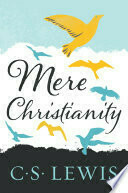
📚 Finished reading: Mere Christianity by C. S. Lewis, and reading something from 70-plus years ago that now seems prophetic never gets old. What if people’s appetite for food was as distorted as their current — 1950s, mind you — appetite for sex, he asks himself and answers:
There is nothing to be ashamed of in enjoying your food: there would be everything to be ashamed of if half the world made food the main interest of their lives and spent their time looking at pictures of food and dribbling and smacking their lips.
Well guess what, Mr. Lewis…
Bullet bit, and Kagi is now my default search engine. An unexpected benefit was their LLM, which gave good answers to a standard set of questions. Between Apple coming out with a new platform, services popping up left and right and a blog resurgence it’s like mid-2000s without the financial crisis.