
📚 Finished reading: Books - A Manifesto by Ian Patterson, which is the sort of book that leaves you with a long list of even more books to read. A delightful problem to have!
🚄 On board the next-generation Acela. By looks alone, the “bullet-train” icon was deserved. The trip itself is marginally less rocky and maybe a few minutes faster than the “old” Acela, which was itself a minimal improvement over the Amtrak regional. It’s the tracks not the trains, alas.
And better than any list I can give is the newly-refreshed (by a new curator) Discovery feed, also available as RSS!
BREAKING: “rage bait” is the Oxford Word of the Year 2025. And before you comment:
We’re not rage baiting you by choosing two words—though that would be in keeping with the meaning of the term!
The Oxford Word of the Year can be a singular word or expression, which our lexicographers think of as a single unit of meaning.
I approve.
“The internet is dying on the outside but growing on the inside”, wrote Yancey Strickler last month in a follow-up to his 2019 essay The Dark Forest Theory of the Internet. To avoid misunderstanding, malicious interpretation, competitive intelligence gathering and cancelation, conversations have been moving from the public-facing “social” “media” to gated, invitation-only services (e.g., your favorite Substack author’s members-only discussion forum) and private group chats (e.g., the Let’s Bomb Yemen Signal texts).
But some parts of this Cozy Web are growing faster than others, and as if often the case doctors and scientists are ruled by inertia. Both groups have the perfect setup, in the form of professional societies, to carve off some gated space in which to have potentially controversial discussions without providing fodder to “the enemy”. In these kinds of metaphors I always reach out to Venkatesh Rao’s The Internet of Beefs, which explains quite well why the public Internet has turned into a dark forest in the first place. And yet even the most developed online community program I know of — American Society of Clinical Oncology’s myConnection — is a stuffy, ASCO boasts as having more than 50,000 members. The two largest “communities” on MyConnection, “New Member” and “Women in Oncology”, have more than 9,000 members each yet the last post on one was 9 days ago (with zero replies) and 7 days ago (two replies). All of November, the more active WiO group had 9 posts with median 1 reply (range 0–20). formal messaging board that can barely be considered active. Most of ASCO’s online activity is still on X, where the official account has almost 150,000 followers and the hashtag for its annual meeting is heavily promoted. Other large hematology/oncology societies like ASH (hematology) and AACR (general cancer research) don’t even have that. Their “online community” is a member directory and heavy promotion of in-person conferences, which I can only assume are the true money-makers.
So I have to wonder, do they still deserve to call themselves “societies”? It is, after all, 2025 and much of life has moved online. By not providing an avenue for true internal discussion and instead promoting public debate, are they hurting their members’ cause more than helping? Yes, it was fun to post out in public when there was a slight chance that your favorite celebrity — or the POTUS — would retweet your post, but we have since learned that this is a liability more than a benefit and there are more high-follower accounts on X now that I would rather avoid. I have argued recently that scientists may want to button up their conversations if they are to keep or regain trust. Should these societies not be providing the means to do so, and not only once per year in a stuffy conference room? ASCO’s MyConection is on the right track, but much too formal. Yes, give people the opportunity to create subgroups and even more private chats as you do now. But if you think debating on X with millions of spectators is healthy, why not give all 50,000-plus members a chance to interact by default, and do so in a format that is not an early 2000s web forum?
Concluding the most recent article, Yancey Strickler provided a toolbox for people to create their own communities which he called the Dark Forest OS, of DFOS. While laudable, this effort is to put it bluntly too artsy fartsy for me. Strickler comes from the world of “creators” whose sensibilities are much different from those of doctors and scientists. But then science and medicine already have much of DFOS in place, from a members list to paying dues. The only thing we need now is for the said societies to build their walled gardens — with an app included! — which they would promote instead of X at the annual meetings and other conferences.
Where a SciMeDFOS would come useful is at smaller scale, for collaborative groups and maybe even large individual labs, where members are known but there are no dues, funds, or IT workers ready to build a custom Twitter clone. If I were to make one now I would probably use Hometown, which is a fork of Mastodon that enables local-only posting, though it being a single person’s passion project makes me a bit reluctant. But then what else do we have, Discord, WhatsApp and Signal? Whatever Dave Winer comes up with in collaboration with Wordpress? Maybe Squarspace could make creating private Twitter clones be as easy as creating websites? I will be on the lookout.
📺 Notes from re-watching the first two seasons of Stranger Things with my 13-year-old:
Enjoy!
📚 Finished reading: Books - A Manifesto by Ian Patterson, which is the sort of book that leaves you with a long list of even more books to read. A delightful problem to have!
And now for the best part of Black Friday: the leftovers on top of freshly baked crusty bread sandwich.
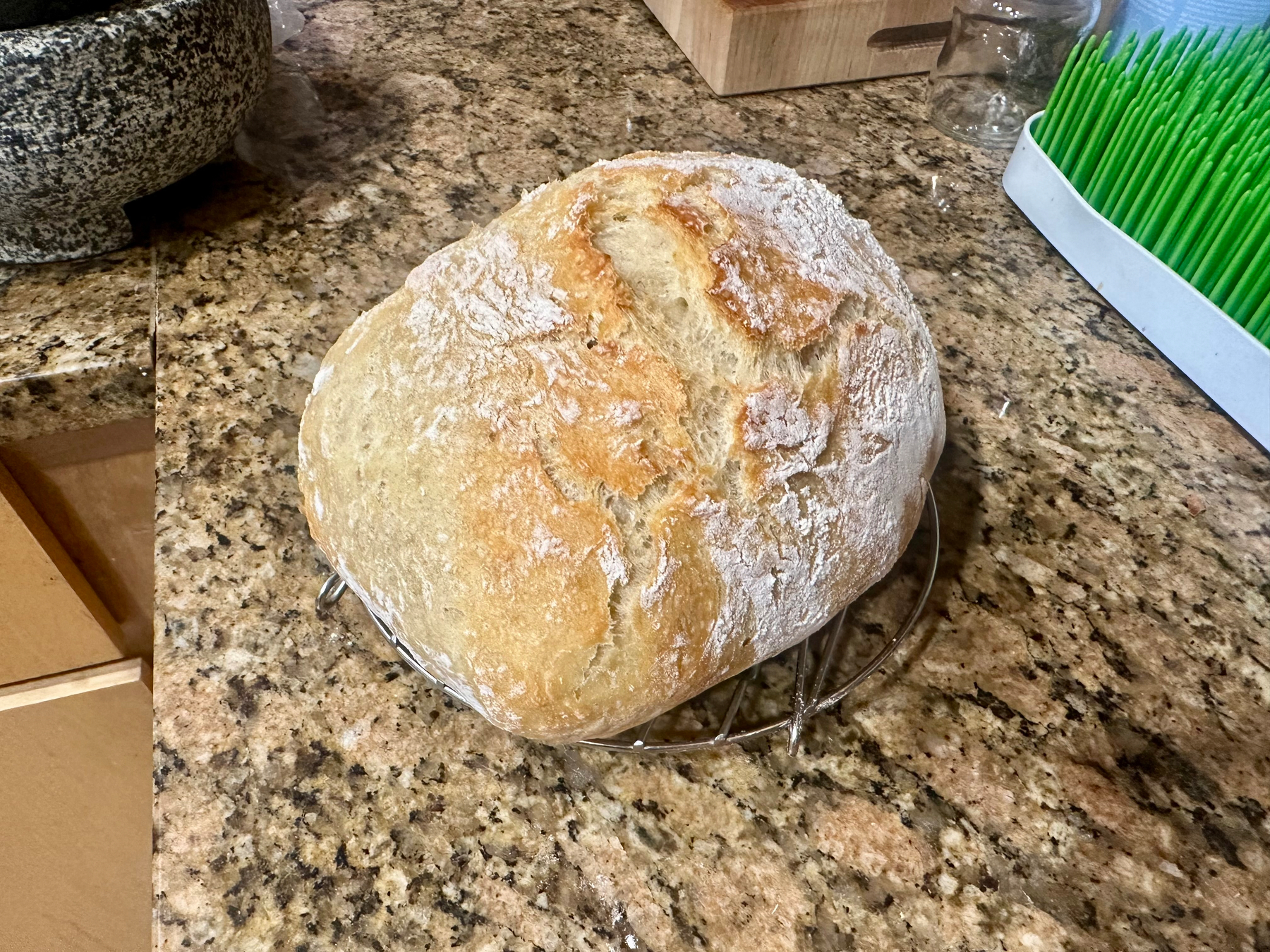
Happy Thanksgiving, dear reader!