At the beginning of the year, I set out to read 23 books. Mission accomplished? As expected, my favorite of the year was not on that wish list.
Here are all 23, ordered by some semblance of category.
- The Sunken Land Begins to Rise Again by M. John Harrison: Harrison at his best, just don’t expect a neat resolution.
- Empty Space: A Haunting by M. John Harrison: a fitting end to my favorite sci-fi trilogy.
- The Seven Moons of Maali Almeida by Shehan Karunatilaka: if Harrison awards someone a Booker, I’d better read their book.
- Invisible Cities by Italo Calvino: the translation was good, but I imagine the original was even better.
- 1177 B.C.: The Year Civilization Collapsed by Eric H. Cline: I think about the Bronze Age collapse more than I do about the Roman Empire, actually.
- On Bullshit by Harry G. Frankfurt: the year of LLM-generated garbage was a good time to refresh BS knowledge.
- The Revolt of the Masses by Ortega y Gasset: prophetic.
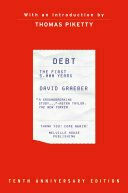
- Debt: The First 5,000 Years by David Graeber: bad.
- The Dao of Capital by Mark Spitznagel: investing should be left to the professionals.
- Whole Earth Discipline by Stewart Brand: half of the book is good, but only time will tell which half.
- How to Listen to Jazz by Ted Gioia: got me to buy an actual CD player, just so I could listen to this anthology.
- Against Method by Paul Feyerabend: his statement that in science “anything goes” could have been controversial only to those who willfully misunderstood.
- Fundamentals of Clinical Trials by Lawrence M. Friedman: too pedantic.
- Antinet Zettelkasten by Scott Scheper: almost a year in and I am still using index cards, although not in the way Scott intended.
- Writing with Style: The Economist Guide by Lane Greene: more fun than a style guide should be.
- Zombies in Western Culture by John Vervaeke et al: true and unnerving.
- The Formula: The Universal Laws of Success by Albert-László Barabási: don’t be fooled by the self-help title, it is a good book.
- Wanting: The Power of Mimetic Desire in Everyday Life by Luke Burgis: the most influential of the books I’ve read this year as it led directly to my favorite.
- I See Satan Fall Like Lightning by René Girard: the best book I’ve read this year, and one that I’ve been thinking about the most.
- Orthodoxy by G.K. Chesterton: I should read it again.
- I Am a Strange Loop by Douglas R. Hofstadter: how a scientist deals with grief.
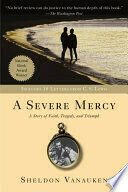
- A Severe Mercy by Sheldon Vanauken: how a Christian deals with grief.
- Pilgrim at Tinker Creek by Annie Dillard: I still can’t believe she was in her 20s.
Not too bad, considering we had a flooded basement and our second move in three years, with some writing wedged in between. And here is last year’s list.
I look forward to removing other people’s requests from Apple Music recommendations. Maybe the 2024 Top 10 list will reflect my actual (poor) taste. Until then:
- The Schuyler Sisters (Hamilton cast)
- Peaches (Jack Black)
- Alexander Hamilton (Hamilton cast)
- History Has Its Eyes On You (Hamilton cast)
- Wait For It (Leslie Odom, Jr.)
- Satisfied (Hamilton cast)
- Viva La Vida (Coldplay)
- Aaron Burr, Sir (Hamilton cast)
- A Sky Full of Stars (Coldplay)
- You’ll Be Back (Jonathan Groff)
And here is last year’s list.
Only six movies that came out this year made it to my watch list:
I did not see Killers of the Flower Moon yet, but I hope to do so soon. I did watch a bunch of older movies, some of which were quite good, but naming them all here would not mean much (and you can always go to the movies tag). Let me instead list the movies I rewatched this year, in the order in which they came out:
Every year I time myself that I should watch more movies, and every year television wins out. May 2024 be the same.
I am not a fan of “wellness” visits, those yearly exams that your insurance insists you should do even if you don’t have any medical problems. Evidence from randomized controlled trials suggests they don’t make any difference to people’s health, but they (obviously) contribute to the primary care physicians' workload.
Having said that, I recently reached a nice round number of years, so it was time to get my cholesterol checked and finally get a flu shot. I enjoyed the banter, but I could also see how and why there may be no health benefit. If annual exams are good for anything, it is to find chronic asymptomatic conditions that have long-term consequences — high blood pressure, high cholesterol and high glucose are the big ones at my age. Testing for them has the highest yield in a generally low-yield visit, so whoever is seeing you should get at least those three right.
After this morning I suspect most places are not doing it right. The person checking my blood pressure did not care at all about the correct technique: whether I still had my sleeves on when they placed the cuff, whether my feet were on the ground or hanging over the raised exam table, whether my legs were crossed, or whether I was talking while measurement was being taken. Worse yet, no one asked or cared whether I had anything to eat or drink before getting my blood drawn for the labs. I could have downed a sugar-and-cream-laden coffee with a Boston cream chaser minutes before the visit and no one would have known. This is the complete opposite of Serbia, where they drill into you at an early age that you must have nothing to eat or drink — water excepted — before getting your blood drawn for anything; which is an extreme of its own kind but one that at least doesn’t result in lab results that you can’t interpret.
At best the loose approach to testing leads to more labs having to be drawn if and when something comes back out of range and the doctor wonders why. At worst it leads to misdiagnosis (“Your cholesterol is through the roof, you’d better be on a statin!") or missed diagnosis (“Your cholesterol is a bit too high but you ate before the labs were drawn so it’s probably just from the food.") — neither is good.
Even when properly done, I don’t think the annual exams are worth it. There are plenty of reasons to see the physician for other things, and sneaking in a blood pressure check and some labs on top of those is easy enough without overburdening the system. For those fortunate enough to be without ailments, a visit every 5–10 years to make sure all the screenings are up to date sounds about right. The paradigm of treating your body as a car to be taken to the shop for scheduled maintenance is wrong: our bodies aren’t intelligently designed mechanisms with replaceable parts that wear out at a predictable rate, and we can’t be taken apart and put back together at a whim. The trend of renaming the annual exam to something else recognizes this reality.
The replacement term, wellness visit, is not much better. In theory it should make the doctor (or nurse practitioner) enhance the lives of people they are seeing by taking a more holistic approach: “You are not a patient, you are a person.” In practice, it turns doctors into box-checkers: are you suicidal (yes/no), do you drink alcohol (yes/no), do you use illicit drugs (yes/no). It takes time away from things doctors were trained for — to treat disease that can be treated, provide council about the diseases that can’t, and know the difference between the two — and makes them do things that are as important, maybe more so, but not in their area of expertise.
The problem isn’t unique to medicine. It’s good to have the police around to deal with murder and theft, not so much when there is a domestic dispute or an acute psychotic episode, now (holistically?) called “a mental health crisis”. They used to be matters for the extended family or neighbors to deal with, not an outside force. Wherever the two were lost, public and private services picked up some of the responsibilities; the doctors seem to have gotten the role of the friendly ear, listening to the issues that used to be mulled over a cup of tea, or — sure, I’ll go there — in the bowling alley. This is a job they were not trained to do and for which they receive no compensation, so in that sense it is fair: the (American) society got what it paid for.
The perks of being born in late December, after the (Gregorian) Christmas but before the New Year:
- No office birthday cakes
- A few big gifts instead of many small ones
- Birthday cards don’t pile up on top of work email
- Guaranteed time off to reflect on the impermanence of life
📚 Writing with Style: The Economist Guide may not be the most important style guide to come out, but it has to be the funniest. Between the self-references and the dry wit lie many lessons: that even professional writers do some things a certain way because the alternative would “look weird”; that I use too many commas, the Oxford comma being one of them; and that if my name were ever to be mentioned in The Economist it would lose its diacritics — unless I insisted they stay. It earned its place on the shelf above the screen.
I tend to add “to all who celebrate” because the Serbian Orthodox Church is still on the Julian calendar, which is off by 13 days. Most orthodox churches are aligned with the Gregorian calendar and have been so for the last 100 years thanks to a revision proposed by — drumroll please — the Serbian Orthodox Church. Having a good idea and not following through because Russia isn’t on board is a typical Serbian thing to do, so points for consistency I guess.
While I admire Craig Mod’s extensive introduction to Walking and Talking, the European part of me — which is 100% to the nearest decimal — is rolling his eyes and thinking, “Really, Craig?”
This is America at its best and worst: optimize, plan, extract every ounce of utility from what is supposed to be a leisure activity. I’d rather go flaneuring.