
Reading The Demon-Haunted World, trying to figure out if Carl Sagan would be disappointed in us or knew what was coming, realizing the two aren’t mutually exclusive 📚
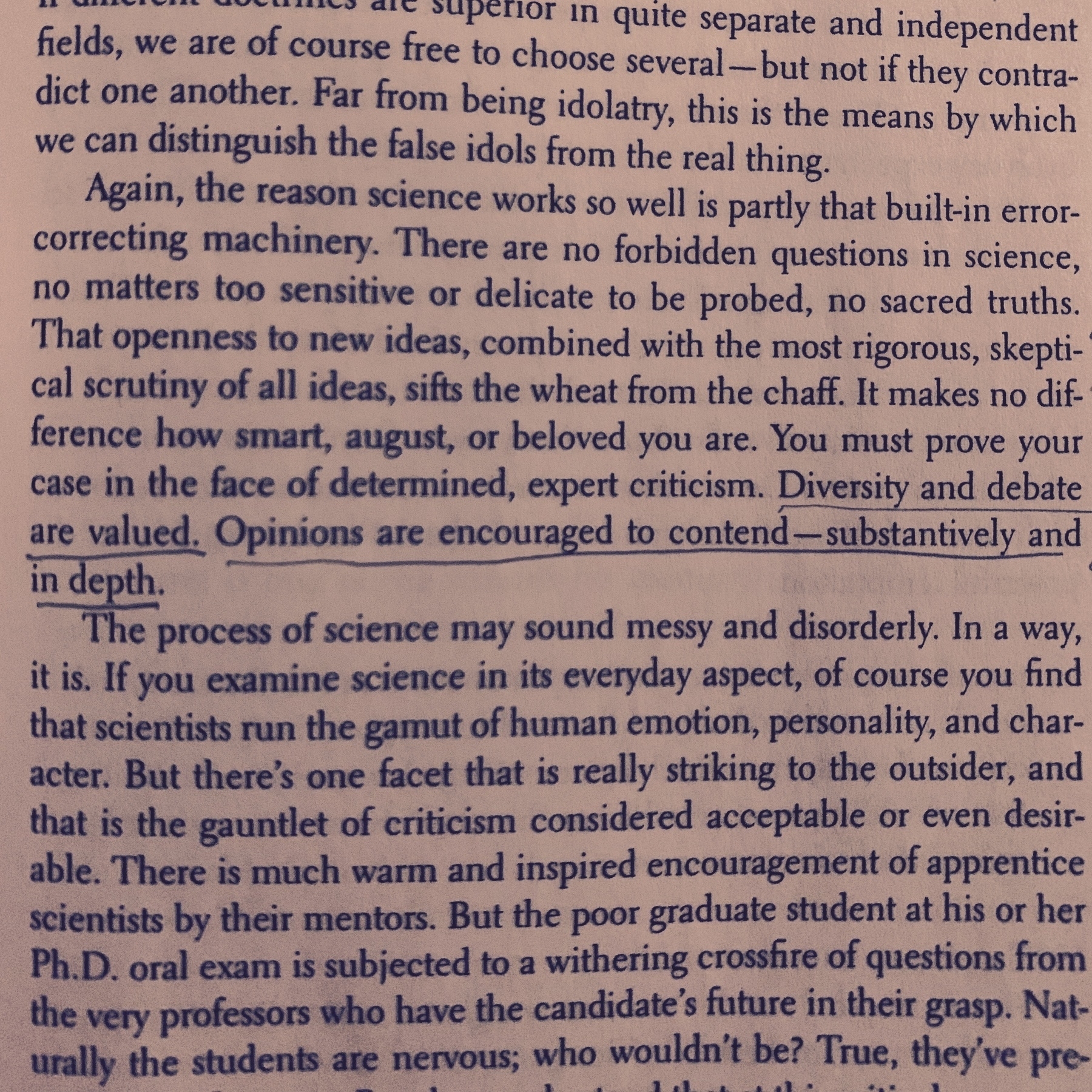
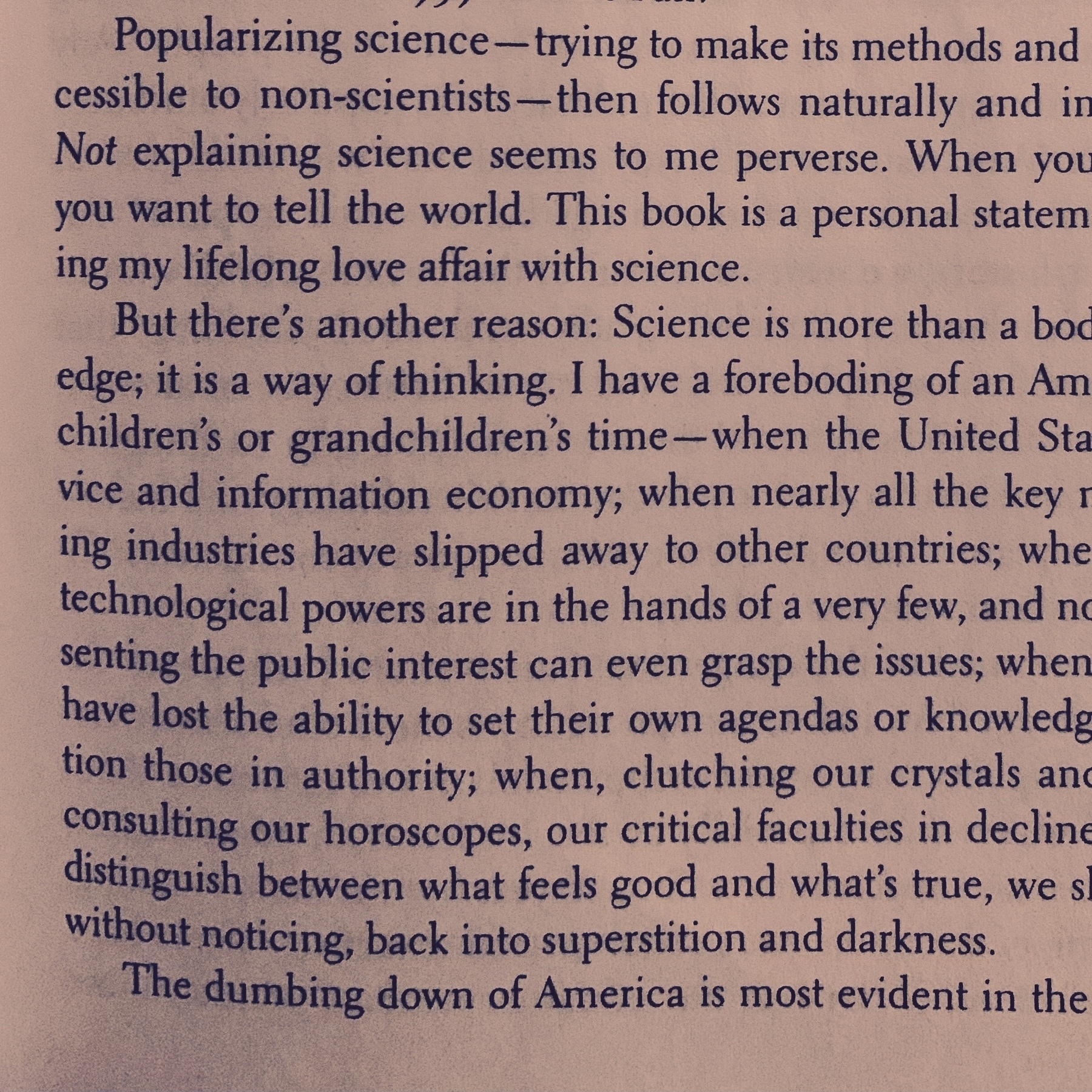
Reading The Demon-Haunted World, trying to figure out if Carl Sagan would be disappointed in us or knew what was coming, realizing the two aren’t mutually exclusive 📚
Bloodshed in DC last night.

🍿 Turning Red: like Bao meeting The Mitchells… to produce something less artistic then either, but at least fun to watch. Mid-March release sounds about right.
Bao meets The Mitchells… to produce something less artistic then either, but at least fun to watch. Mid-March release sounds about right.
There is no clearer sign of us entering a new era than reading a book from 2010. Not so long ago, wide-eyed journalists still described the Internet — note the capitalization Also note that the Chicago Manual of Style and the Associated Press both revised their stylization to lowercase in 2016, Year Zero of the New Era. This was not, of course, the year’s only notable event. — as a force for good, an incubator of ideas whose capacity to connect people will lead to an exponential growth of innovation and prosperity. If one was to build a case against journalisitc blindness to externalities, Where Good Ideas Come From would make for a good exhibit.
The case against journalistic ignorance of patent law, too. The author, Steven Johnson, describes patents as means of rewarding inventors — and surely we can find a better way to reward them than a device that restricts the all-important distribution of knowledge. Only, that is not why the patent system was introduced, as described clearly if not succinctly by Vannevar Bush. Why a science journalist would straw-man a crucial factor of western technological superiority before attacking it is beyond the scope of this brief review.
The third feather in Johnson’s cap of muddled thinking is his conflation of discoveries and inventions, putting both under the broad category of “ideas”. The problem with that is apparent in the last few chapters of the book, where a series of 2x2s of ideas distributed according to the number of people involved (individual versus networked) and whether the enterprise is commercial (market versus non-market) “proves” Johnson’s case that non-market networked operations are superior, and should be supported above others. After all, from the 1800s onwards, most of the dots have been in their quadrant!
But here is a random Randomization was performed by my hovering a pencil above the page and dropping it with eyes closed. If the pencil hit an empty space, the first idea straight down from the spot was chosen regardless of distance. sample of the 54 ideas listed in the non-market/networked quadrant: electron, RNA splicing, chloroform, cell differentiation, EKG, cosmic rays, universe accelerating, genes and chromosomes, atoms form molecules, radiocarbon dating. Only one of those ten, EKG, is now a physical product being sold and used. Two more, RNA splicing and radiocarbon dating, are methods that could be commercialized. Those three I would describe as inventions, and all three have a rather limited scope of use. Everything else are discoveries, telling us things about how the world works but not directly improving our lives in any meaningful way, other than satisfying our thirst for knowledge.
Now here are 7 ideas randomly selected from the 35 listed in the market/networked quadrant: contact lenses, washing machine, plastic, elevator, steel, television, radio. If Johnson’s quadrants prove anything, it is that having market forces involved is strongly associated with invention. We can, of course, discuss the direction of that particular arrow, and whether markets co-opt inventions they deem useful rather than actually developing them. The distinct lack of inventions in parts of the world where market forces aren’t in play hints at my preferred answer.
Having said that, there are some good ideas in this book about good ideas. One of them, the adjacent possible, a mental model for both discovery and invention, is also the name Johnson now uses for his (rather … good) newsletter. That is the concept that made me remember the book fondly after my initial reading, 10 years ago, and it is the newsletter that made me re-read it. And a good thing too — because even though the book is the same, both I and the world have changed enough to make it irrelevant. It won’t be in my re-read list.
The Wes Andersoniest of all Wes Anderson movies, at least the live action ones. Every frame is a painting here, or a New Yorker front page, and in that regard this is also his most artful work. But The Grand Budapest Hotel is still a better movie.
Old men and their tales are good for many things: knowledge, inspiration, amusement, and, occasionaly, ridicule. Vannevar Bush provides all four in this series of (mostly war) stories about innovation and how to kill it. The anecdotes are loosely grouped into themes, and are even more loosely chronologically arranged; an opportunity for a joke, a pun, or a humble-brag trumps any attempt at organization. The feeling is very much like sitting crossed-legged on the carpet next to your grandfather’s airmchair as he — pipe in one hand, tumbler of scotch in the other — spins you a yarn.
Quite a yarn, though. Bush spent time as a leader in academia, government, and industry, in that order, and has good and bad things to say about all three. His preference is for strict hiearchy; his favorite part of government is the military, his most hated subordinates are those who don’t follow chain of command. One doesn’t win a World War without gaining some appreciation for epaulets and funny hats, I suppose.
That said, his is the most convincing case for patents that I’ve come across: they should be seen as a way to secure a return on investment for the venture capital, not a monetary incentive for the inventor. Having a few patents in his name, he knows an idea by itself is worthless without the resources to implement it, resources which won’t come unless there is a guarantee someone else won’t be able to come and lift the final product, bypassing the costly process development. Fifty years after this clear and concise explanation, people still make the mistake of describing patents as rewards (more on Steve Johnson’s book — which if we are being pedantic came out 40-some years after Pieces of the Action — some other day).
So an intelligent, wise, industrious man in the twilight of his career retells his life’s story — all well and useful — but he also gives some predictions: that American politicians are becoming more leader-like and that we should expect to see even more leadership in high-quality politics in the coming days, possibly thanks to that new darling of American intellectuals, the television set. Pieces of the Action came out in 1970, two years before the Watergate break-in and four years before Nixon’s resignation. The difference between metaphorical peaks and real ones is that you don’t know you are on the former until you are well on your way down, and if you spent your life inventing the modern world, running corporations and fighting Nazis, the way down is hard to imagine.
So far so good. If the first month is anything to go by, I will have the 2022 reading list licked by September.
My infatuation with Karl Popper’s philosophy of science didn’t survive actual experience in the lab, which was far messier and more nuanced than the strict Austrian hypothesis falsification workflow Popper described. What, then, to make of this book, which is Popperian science applied to financial risk mitigation? It makes sound and persuasive arguments, but then again so did Popper when discussing general scientific progress.
In the dilemma also lies the answer — unlike Popper, who never conducted practical research, Mark Spitznagel is investor first, philosopher of finance last. He needed a framework to impart his wisdom and Popper’s served nicely, though I suspect just as much knowledge transfer would have occurred had he used verse.