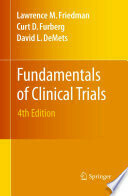
At the very start of the textbook Fundamentals of Clinical Trials the authors make a distinction between clinical trials — comparing two or more different interventions — and clinical studies, which merely describe an intervention without comparing it to anything. So, there can be no such thing as a “Phase 1 trial”, since they typically involve a single drug at different doses and schedules. The only true trials, according to the authors, would fall under Phase 3, or Phase 2b at the earliest.
This is stupid, misleading, and not at all how the words “trial” and “study” are used by anyone else, including the biggest and most important drug regulatory agency in the world. There are many such pointless exercises of professorial power in medicine, including my favorite: whether the correct pronunciation of “+” in “7+3” is “plus” or “and”. They amount to nothing more than purity tests that award the wielders of the right language a false sense of precision. As Nassim Taleb wrote, nitpicking is the enemy of thought.
The rest of the book is good enough, but more on that later.
February 1, 2023
📺 I was 10 when The X-Files came out and watched it week by week through hyperinflation, school closures and bombings. Now that we have a 10-year-old at home I thought it would be a good time to revisit the series, and it has aged very well indeed. This will be fun!
After a few months of intermittently kicking the tires on Dave Winer’s FeedLand, I’ve finally had the time to port over a few feeds from my preferred RSS reader. The wonderful thing about FeedLand is that you can easily follow my feed categories and read posts without having an account (which is fortunate, since new signups on Winer’s own server are on hold). The full list of feeds is here. There is even a feed of posts I liked! It’s feeds all the way down.
The Science category has your usual suspects but I had to dig deep for Medicine since many of the blogs I follow haven’t been updated in years and others have turned into HuffPost-level text mills. Fortunately, Substack enabled a resurgence of medical writing, with feeds enabled by default.
Did I mention NetNewsWire is a free, open source RSS reader available on MacOS and iOS, and can sync via iCloud? For the anti-Apple readers, Feedly is there, I guess?
The National Cancer Advisory Board is as big of a deal as it sounds, but have a look at their Charter — Description of Duties in particular — and try not to yawn. I suspect whoever wrote this also writes grant application instructions. May this in part be why science is bogged down?
In any case, the Board meetings are open to public. The next one is on February 9, 2023 at 1:15pm EST and can be viewed at videocast.nih.gov. That website is itself a trove of excellent recordings unrelated to federal body deliberations: just last week there was a lecture on bacterial immune systems, here is my old boss talking about interleukin-15, and hey what’s this?
Gaithersburg, MD, January 31, 2023 – Cartesian Therapeutics, a fully integrated, clinical-stage biotechnology company pioneering RNA cell therapies for autoimmune diseases and cancer, has dosed the first participant in its Phase 2b randomized controlled trial (RCT) for generalized myasthenia gravis (MG), an autoimmune disorder that causes muscle weakness and fatigue. The RCT will evaluate the efficacy and safety of the company’s lead asset, Descartes-08, a first-in-class, RNA-engineered chimeric antigen receptor T-cell therapy (rCAR-T).
To the company’s knowledge, this is the first placebo-controlled study of an engineered cell therapy, and the most advanced investigational cell therapy in clinical development for any autoimmune disease. Descartes-08 is administered over 6 weekly outpatient visits and requires no preconditioning chemotherapy.
The manuscript from the open-label study is almost done, but some of the data was presented back in September 2022 (and available on YouTube). I also talked about the study in an MGFA webinar.
This April will be 10 years since Elsevier aquired Mendeley, up until then the best reference manager around. And it took longer than expected, but it looks like they finally killed it.
To all the Mendeley refugees: Endnote is just as bad, and in many ways worse. Get Zotero.
Google Scholar alerts are a quick if crude way to be up-to-date with literature. In addition to journal articles and conference abstracts it also looks at U.S. patent applications, and despite the impenetrable legalese something will ocasionally turn up that is at least amusing, if not informative.
Today was one such occasion: a patent for a combination of two already approved drugs to treat toxicity of CAR T-cell therapy, by the group which, admittedly, was the first to give CAR T-cells to humans and the first to treat their side effects.
I may be showing my ignorance of U.S. patent law here but, how is this a thing? These drugs are already commercially available and widely used for exactly this indication. How would they enforce this patent, and how exactly would the patent help with development and commercialization of two drugs which are already on the market?
After reading Steven Johnson’s Where Good Ideas Come From I realized that not everyone makes the distinction between discoveries and inventions,
Which is the first website that DuckDuckGo returned, and it is servicable, but I was flabergasted by the long list of nearly identical websites with domain names all some variant of “difference between”. This is how ChatGPT destroys Google. and this may be an example of a discovery masquerading as an invention. Nothing was created — the drugs were already there — the team merely discovered that those two drugs work in a specific indication. If this is deserving of a patent, should every drug combination be patented?
To be clear, I am not a lawyer — caveat lector — but the whole patent system needs an overhaul and making a clearer distinction between discoveries and inventions should be one of the items on the long list of things that need attention.
January 27, 2023
A lengthy overview of the implications of ML/AI to biology and drug discovery came out yesterday, and while I appreciate its enthusiasm and breadth, the answer to the question posed in the summary — What if this time is different? — is, sadly, no, probably not.
Google/Alphabet has its own AI programs — some of them mind-blowing — which are bound to increase now that ChatGPT is out with potential to destroy the value of the one thing Google still does well: searching the internet.
Facebook/Meta has only some embarassing failures to show for their efforts, for now, but one can expect some rearrangement of priorities once the company’s shareholders see what being all-in on AI has done to $MSFT.
If artificial general intelligence is possible,
For an explanation for how AI differs from AGI I recommend this short interview with David Deutsch. odds are that it will emerge in this decade. Determining whether that is good or bad I will leave as an excercise to the reader.
P.S. While getting the links for this post I came upon a WaPo article which came out today and devotes a single paragraph to the potential harms of AI:
Some AI ethicists fear that Big Tech’s rush to market could expose billions of people to potential harms — such as sharing inaccurate information, generating fake photos or giving students the ability to cheat on school tests — before trust and safety experts have been able to study the risks. Others in the field share OpenAI’s philosophy that releasing the tools to the public, often nominally in a “beta” phase after mitigating some predictable risks, is the only way to assess real world harms.
This is true, as things stand now. Wouldn’t it be nice if it stayed that way.